

Media pump - design, function and troubleshooting

Important safety note

The following technical information and practical tips have been compiled by HELLA in order to provide professional support to vehicle workshops in their day-to-day work. The information provided on this website is intended for suitably qualified personnel only.

1. Basics

Coolant circulation pump - media pump mp150

Thermal management in motor vehicles is an indispensable part of modern vehicle architecture. Components such as the media pump ensure optimal control of heat flows in the vehicle and improve the service life, efficiency and performance of electric vehicles.

To make optimum use of the heat energy generated, the thermal management system controls the relevant heat flows in the vehicle. This ensures that parts and components, such as engines or batteries, can be operated within their ideal temperature range and that the vehicle interior can be air-conditioned according to individual needs

2. Function

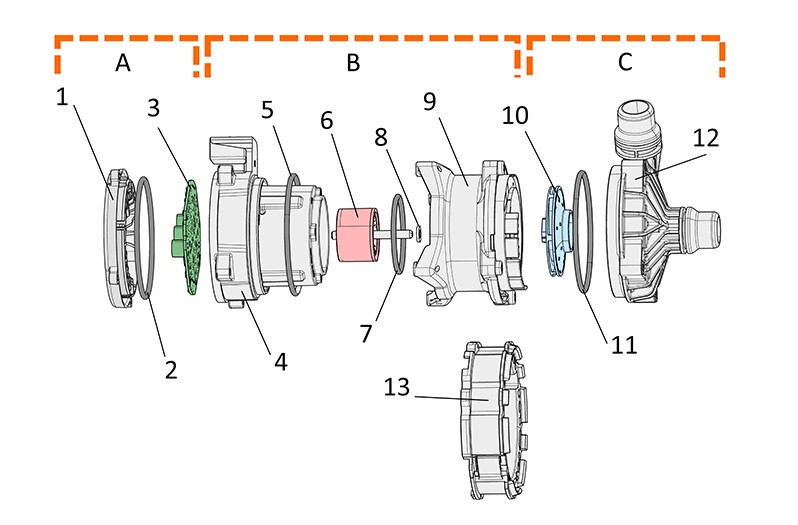
Design and function of the HELLA media pump

The MP150e media pump is an electric coolant circulation pump used in the cooling circuit to circulate the coolant and to cool the battery, electric drive and power electronics accordingly. The pump works independently of the engine and according to the requirement, and it has continual levels of activation. It can be used as a circulation pump or a bypass pump. Consequently, it is possible to increase the service life and efficiency of the lithium-ion battery, as well as boost the overall range of electric vehicles.

The MP150e media pump has a lightweight, compact design and is equipped with safety features such as blockage detection, dry-running protection, temperature, voltage and current detection.

In addition, the pump has an active cooling concept

Blockage detection, dry-running detection

If there is a blockage or no coolant in the pump, the defect is detected by the integrated electronics based on the pump speed and the starting current. If there is no change within a test cycle initiated by the control unit, the pump is switched off and an error entry is generated

Temperature detection

Since the maximum coolant temperature for the MP150e is 90°C, the temperature reduction is designed to maintain the temperature within the specified range. The temperature derating of the pump controls the temperature of the electronics by reducing the current consumption.

If the coolant temperature rises above the maximum value or the temperature sensor on the PCB is damaged, the electronics detect the over temperature error. The pump electronics classify 124°C as an over temperature error and stop the pump in a controlled manner

Voltage and current detection

If overvoltage or undervoltage is detected, the pump goes into idle mode and runs at reduced power to ensure the coolant flow.

If overcurrent is detected, the pump stops to prevent the high currents from damaging the pump.

For both errors, a fault code is stored in the fault memory

Active cooling concept

The active cooling concept ensures improved dissipation of thermal energy within the pump by thermally coupling the printed circuit board and the motor windings to the cooling circuit and optimally placing the current-carrying components to improve temperature distribution on the printed circuit board.

This means that the MP150e can be operated with high electrical current density in the stator windings without overheating and is largely outside the influence of the ambient temperature

Technical data and dimensions

Technical data for MP 150
Rated voltage12 Volts
Voltage range8 - 16 Volts
Operating temperatureCoolant -40 °C to +90 °C Ambient range -40°C to +120°C
Hydraulic operating point3000l/h (Δp = 1.1bar, T_med =50°C, glycol/water mixture 50/50, U = 12 V)
Direction of rotationRight
Degree of protectionIP6KX, IPX6K, IPX7, IPX9K
Weight670 g
Lifetime> 30000 h

Technical data may vary depending on the design.

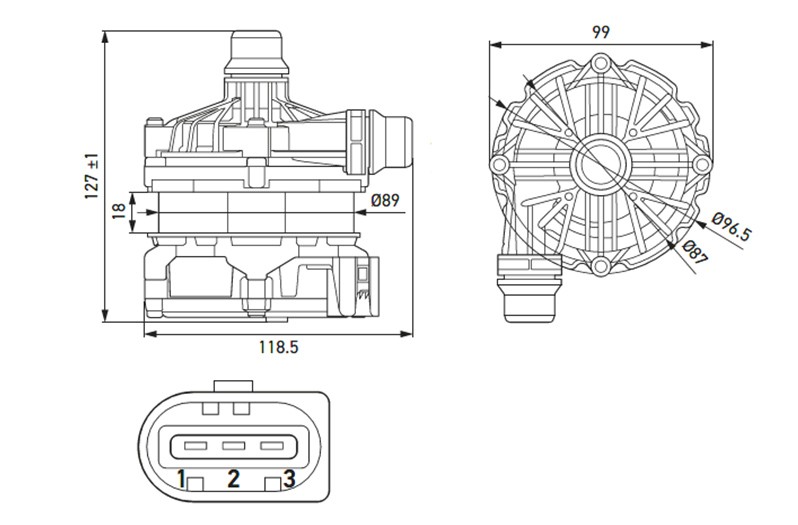
Medium pump dimensions
Pin assignment of electrical connector: Pin 1 = ground; Pin 2 = LIN (data bus); Pin 3 = power supply
3. Background information

Areas of application

Electric coolant circulation pumps are used in main or auxiliary cooling circuits of vehicles with combustion engines or alternative drives.

Their areas of application are:

  • Engine cooling
  • Cooling of the exhaust gas recirculation
  • Indirect charge air cooling
  • Transmission cooling
  • Cooling of battery, power electronics or drive in hybrid and electric vehicles

Depending on the drive type (internal combustion engine, hybrid, electric) and the system, one or even several pumps can be installed in the vehicle

4. Overview

System integration in the vehicle

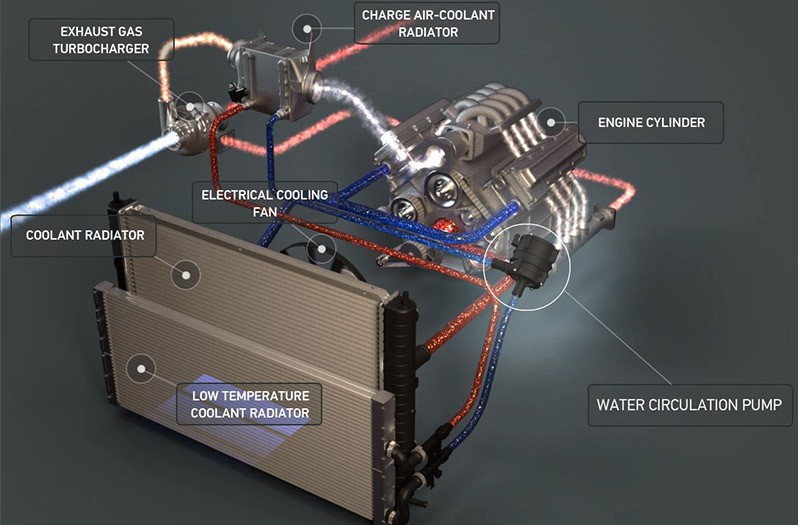
Example of system integration in the cooling system on a vehicle with combustion engine and electric motor.

Vehicles with combustion engines or hybrid vehicles ( Fig. 1 )
The media pump is integrated into the engine cooling circuit in addition to the mechanical water pump and is used for additional cooling in vehicles with combustion engines. The pump's functions include controlling the temperature for charge air cooling, transmission cooling, exhaust gas recirculation or other demand-controlled systems. As a result, both emissions and fuel consumption can be significantly reduced.

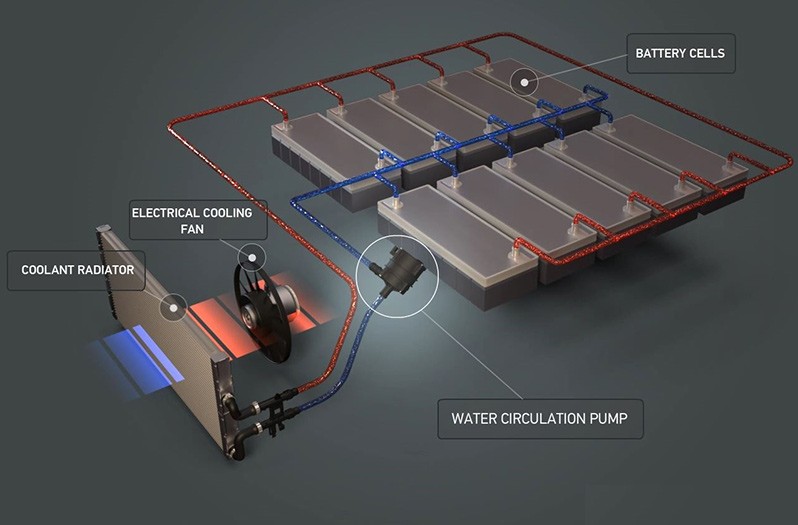
Electric vehicle ( Fig. 2 )
By using the media pump, the coolant flow in the electric vehicle can be made more flexible and efficient. It ensures an optimal battery temperature and increases the battery's lifetime and efficiency. The media pump guarantees an adequate flow of coolant so as not to exceed the maximum allowable battery temperature. This ensures a long battery life and protects all other components in a thermal management system from thermal damage..

5. Troubleshooting

Testing and fault diagnosis

The function of the electric coolant circulation pump is monitored via the relevant higher-level system control unit. Any faults that occur are detected by the pump electronics, forwarded to the system control unit via the data bus interface and stored in the fault memory. With a suitable diagnostic unit, the error codes can be read out and used for further troubleshooting. A system-relevant fault is indicated by the warning lamp lighting up on the instrument cluster as a warning to the driver.

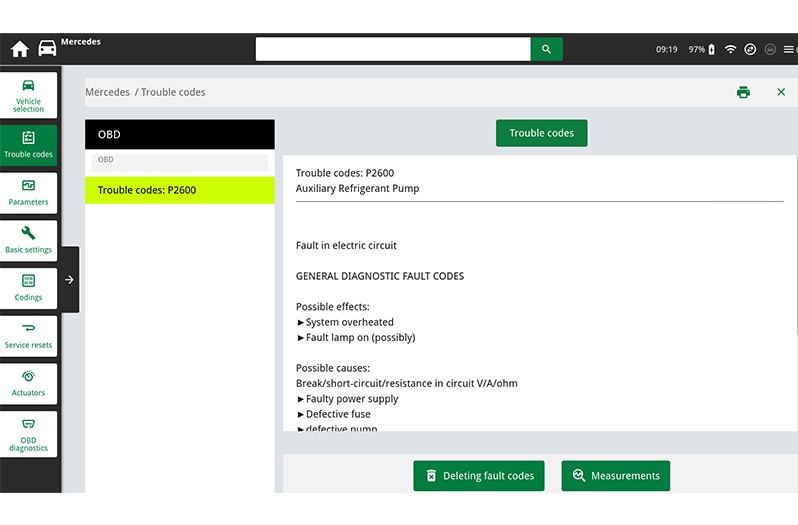
In our case study, the fault P2600 was read out from the control unit. Fault code P2600 - Auxiliary coolant pump - circuit faulty
Possible causes:

  • Faulty power supply
  • Fuse defective
  • Interruption, short-circuit, resistances in the electric circuit
  • Pump defective
  • Control unit faulty

Possible effects of the fault entry:

  • Cooling system overheated
  • Error lamp lights up
6. Cause of failure

Effects and causes of failures

Severe mechanical strain, contamination, coolant loss and high temperature differences promote wear and can lead to a defect in the coolant circulation pump over time.

Reasons for failures can be:

  • External or internal mechanical damage
  • Leaks - loss of coolant
  • Contamination in the cooling system
  • Coolant quality
  • Faulty power supply

Important!

A defective MP 150 media pump must be replaced!
Repair is not provided by the manufacturer

7. Safety instructions

Repair and assembly instructions

The cooling system is under pressure.

  • There is a risk of injury from leaking coolant.
  • Before repairing the cooling system, make sure to bring down the system pressure.
  • Wear safety goggles and protective clothing

If the electrical coolant circulation pump is to be replaced as part of the repair, it is imperative that you observe the safety advice and the repair instructions of the product manufacturers and the vehicle manufacturers

  • Only trained specialists are permitted to carry out repair work on a cooling system.
  • If necessary, please use the installation or removal tools specified by the vehicle manufacturer
  • Before replacement, the electrical connection of the coolant circulation pump must be disconnected from the vehicle electrical system or the battery must be disconnected.
  • The cooling system must be checked for contamination and, if necessary, flushed out and cleaned before installing a new pump.
  • The pump must not be activated electrically before filling with coolant!
  • After installing the coolant circulation pump, the cooling system must be bled and checked for leaks.
  • The media pump MP150 must be operated with a water-antifreeze mixture with at least 45% glycol. Only use the water-antifreeze mixture recommended by the vehicle manufacturer.

Repair note for electric vehicle

Components under high voltage!

Please observe the general and manufacturer-specific safety instructions.

All work must only be carried out by 'electrically trained personnel'.

The high-voltage (HV) system must be disconnected from the voltage by a HV expert who is certified to work on these type of systems, before the repair.

The country's specific laws and regulations on working on high-voltage systems must be observed and followed

Important!

Schematic illustrations, pictures and descriptions serve to explain and illustrate the document text and cannot be used as a basis for vehicle-specific repairs.

The control unit diagnostics have been illustrated using the mega macs 77 diagnostic unit as an example. The respective test depth and variety of functions can be set out differently depending on the vehicle manufacturer and these are dependent on the relevant system configuration of the control unit.

Bu makale sizin için ne kadar yararlı?

Hiç yararlı değil
5
4
3
2
1
Çok yararlı
Başarı

Yanlış Captcha

Yanlış Captcha

Hata

Bir sorun oluştu

Yedek parça bulucu
OE no. Manuel araç tanımlama Evrensel parçalar
En iyi üreticiler
Diğer üreticiler
Araç serisi Geri
Araç Geri

Giriş alanına OE numarasını girin. OE numarasını genellikle yedek parçanın üzerinde veya araç belgelerinde bulabilirsiniz.

Yedek parça bulucu
Ayrıca OE numaralarıyla yedek parçaları belirleyin Ayrıntılı ürün bilgileri Yakınınızdaki toptancılar
dummy
Processing Selected Car
Üretici
Model serisi
Araç
Güç [PS/kW]
Silindir hacmi [ccm]
Yakıt tipi
Model yılı
Motor kodu

Kategori:
Geri
dummy
Paylaş
Gönder Bağlantıyı kopyala
URL panoya kopyalandı!
Ürün numarası
Number
Numara panonuza kopyalandı!
Web'de ara Montaj kılavuzları
Daha fazla ayrıntı
Ürün adı Değer
Daha az ayrıntı

Bayiniz
Autoteile Krammer GmbH
dummy
Lechstraße 1-3
68199 Mannheim
Web sitesini ziyaret edin

You might also be interested in

Lastik Basıncı İzleme Sistemi (TPMS)
Temel bilgiler
Lastik Basıncı İzleme Sistemi (TPMS)
Doğrudan ve dolaylı lastik basıncı izleme sistemlerine (TPMS) genel bakış – araç tamirhaneleri için bilmeniz gereken her şey.
Okuma süresi: 13 dakika
HELLA 77 GHz radar sensörü: Yapı, işlev ve uygulamalar
Temel bilgiler
77 GHz radar sensörlerinin bakımı ve tanılaması
HELLA 77 GHz radar sensörünün sürücü destek sistemlerini nasıl desteklediğini ve her türlü hava koşulunda nesneleri nasıl doğru bir şekilde tanımladığını öğrenin. Tasarım, işlev ve araçtaki uygulamaları keşfedin.
Okuma süresi: 6 dakika
NOx sensörü - Mercedes Benz
Temel bilgiler
NOx sensörü - Mercedes Benz
Egzoz gazı arıtma sisteminde sorun giderme sırasında NOx sensöründe bir arıza tespit edilirse, bu durum atölye için küçük bir zorluk oluşturabilir.
Okuma süresi: 5 dakika
Azot oksit sensörü - NOx sensörü
Temel bilgiler
NOx sensörü - Sorun giderme ve onarım talimatları
NOx sensörü hakkında her şey: çalışma prensibi, tipik arıza nedenleri, belirtiler ve kontrol ünitesi ile arıza teşhisi.
Okuma süresi: 6 dakika
Aktif ADAS sistemine sahip araç, şehir trafiğinde yayaları ve e-scooter’ları radar ve sensör sinyalleriyle algılar – otonom sürüş ve sensör füzyonuna örnek.
Temel bilgiler
ADAS ve otonom sürüş: Servisler için genel bakış
ADAS ve otonom sürüş hakkında bilmeniz gereken her şey: fonksiyonlar, sensör füzyonu, yapay zeka ve teşhis cihazları – otomotiv profesyonelleri için özlü şekilde açıklanmıştır.
Okuma süresi: 11 dakika
Servis elektrikli bir araç üzerinde çalışıyor: E-mobilite günlük servis rutininde güvenli bir voltaj izolasyonu için yüksek voltaj teşhisleri, ölçüm cihazları, yalıtımlı eldivenler ve kişisel koruyucu ekipmanlar (KKE).
Temel bilgiler
Günlük servis rutininde e-mobilite: Teknoloji ve gereklilikler
Elektrikli araçlar, servis süreçlerini değiştiriyor: Servislerin yüksek gerilim sistemlerini, yeni arıza teşhis prosedürlerini ve gerekli nitelikleri nasıl ele aldığını öğrenin
Okuma süresi: 14 dakika
CSC Tool ile Adaptive Cruise Control veya ACC otomatik mesafe kontrol sistemi
Temel bilgiler
Adaptive Cruise Control sensörünün ayarlanması
ACC radar sensörünü doğru şekilde nasıl kurarsınız - adım adım talimatlar ve tamirhaneler için faydalı pratik ipuçları.
Okuma süresi: 4 dakika
Elektrikli Bagaj Kapağı Tahrik Sistemi
Temel bilgiler
Elektrikli bagaj kapağı tahrik sistemi: Arıza arama
Elektrikli bagaj kapağı tahrik sistemindeki tipik arızaları sistematik olarak teşhis edip, bunların kaynağını kesin olarak belirlemeyi öğrenin.
Okuma süresi: 6 dakika
Egzoz gazı sıcaklık sensörünün kontrol edilmesi
Temel bilgiler
Egzoz gazı sıcaklık sensörünün kontrol edilmesi
Egzoz gazı sıcaklık sensörünü test etmek için adım adım talimatlar - VW Passat 2.0 TDI'da gösterilmiştir.
Okuma süresi: 2 dakika
Enjektör / Enjeksiyon valfi
Temel bilgiler
Enjektör / Enjeksiyon valfi - İşlevi ve kontrol edilmesi
Arızalı enjektör nozulunu nasıl teşhis edeceğinizi ve atölyede nasıl değiştireceğinizi öğrenin.
Okuma süresi: 4 dakika

Kısa soru

Harika! Sadece bir adım daha kaldı

Abonelik başarılı

Gelen kutunuza gidin ve e-posta adresinizi onaylayın, böylece güncellemelerimizi kaçırmazsınız!

Yepyeni teknik videolar, araba tamir tavsiyeleri, eğitimler, faydalı teşhis ipuçları, pazarlama kampanyaları ve çok daha fazlasını iki haftada bir doğrudan e-posta kutunuza alacaksınız!