Activated carbon container in the car: Function, causes of faults and diagnosis

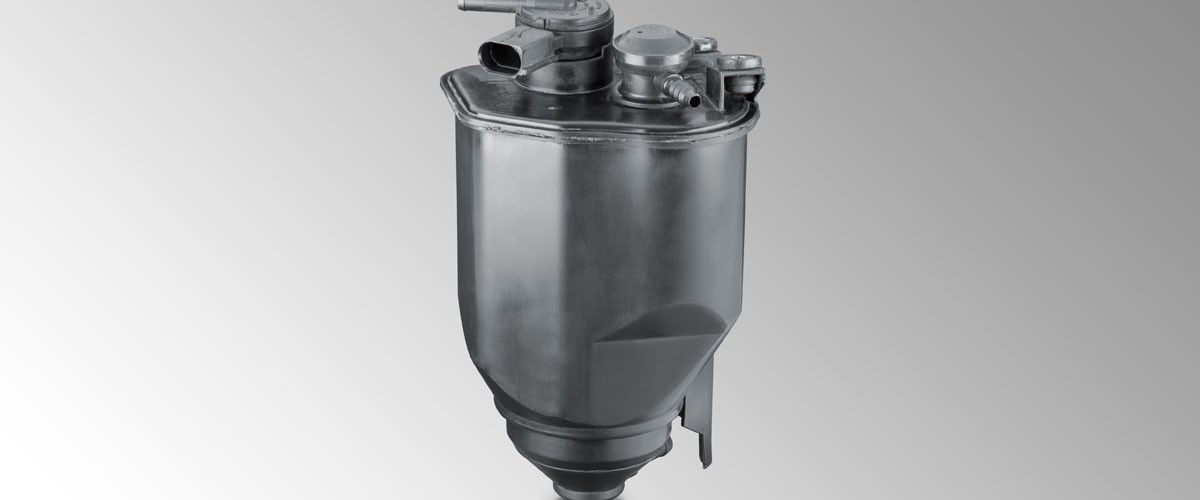
The activated charcoal canister protects the environment against unburnt fuel vapours. This page explains how the system works, what could cause a fault, and how malfunctions affect the running of the engine. You will also find valuable practical tips for troubleshooting in connection with the activated charcoal canister

Important safety note

The following technical information and practical tips have been compiled by HELLA in order to provide professional support to vehicle workshops in their day-to-day work. The information provided on this website is intended for suitably qualified personnel only.

1. Basics

Basic principles of the activated charcoal canister

Ever since the introduction of lambda control on vehicles with a catalytic converter, all emissions from a vehicle have been subject to legal regulations.

This also includes evaporating fuels (hydrocarbons) from the fuel tank. Since these so-called volatile hydrocarbons are not allowed to enter the atmosphere, they need to be captured and stored for reuse. In order to comply with legal regulations, retention and recirculation systems for fuel vapors are used here.

One important component in this system is the activated charcoal canister.

2. Function

Functional principle of the activated charcoal canister

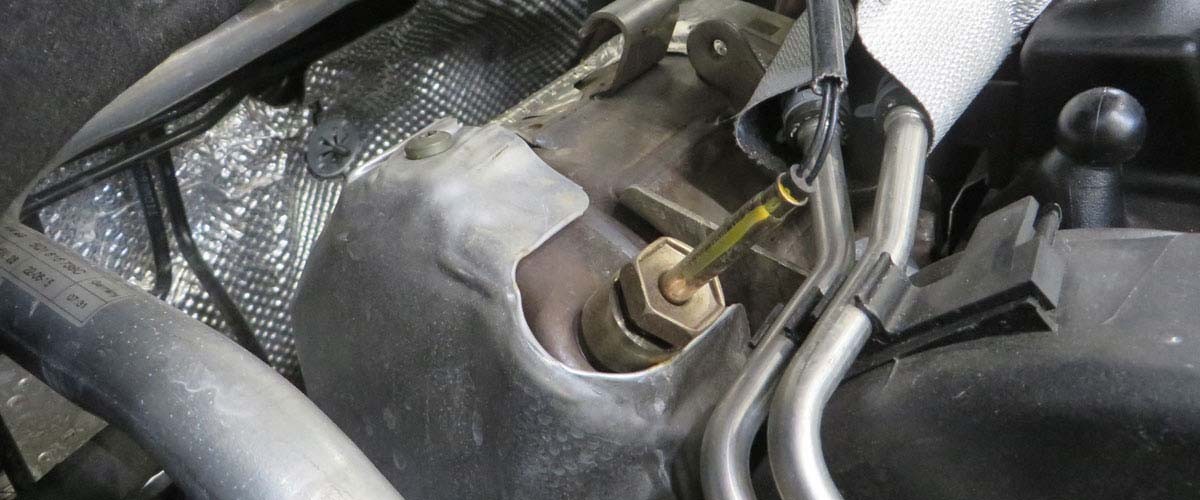
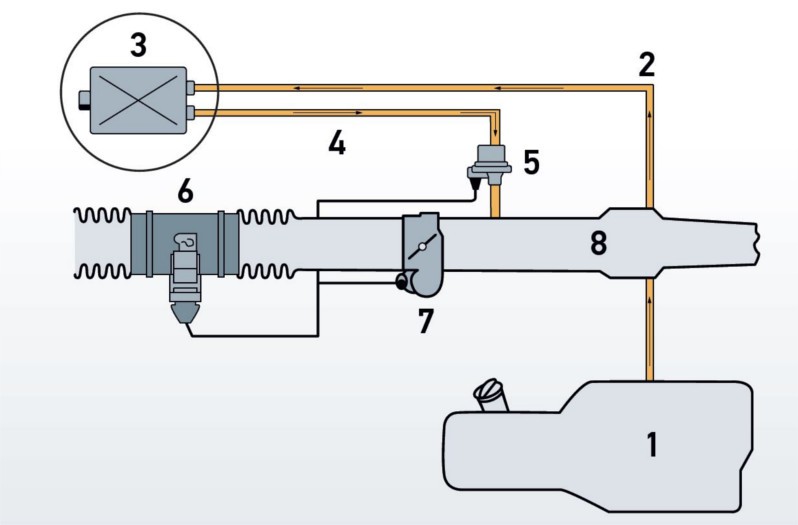
The activated charcoal canister is connected to the tank bleeder via the pressure compensation line and is used to capture and store fuel that evaporates under the influence of heat.

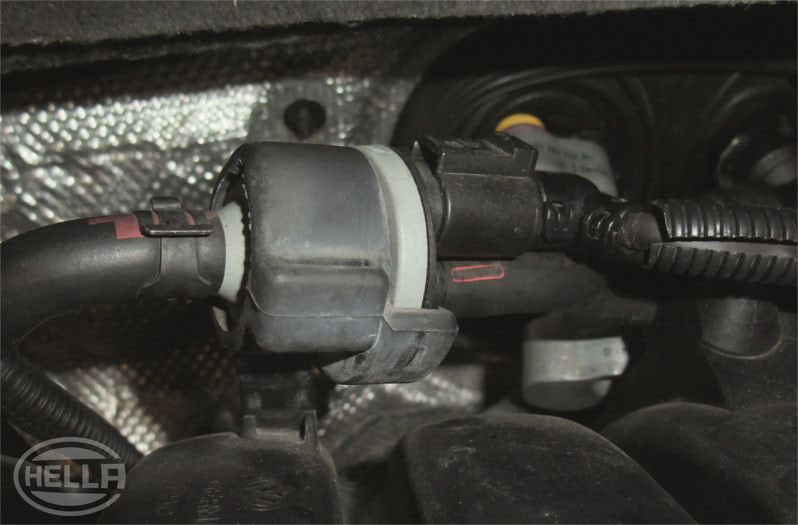
The timed valve is located in the connecting pipe between the intake pipe and activated charcoal canister. As soon as the lambda control is active, the timed valve is actuated and the line between the suction pipe and activated charcoal canister is released. As a result of the vacuum in the suction pipe, ambient air is sucked in through an opening in the activated charcoal canister. The air that is sucked in flows through the activated charcoal and guides the captured fuel to the engine for mixture formation.

Since the system affects the composition of the mixture, it only becomes active once the lambda control is operating.

3. Symptoms

Activated charcoal canister faulty

Fault symptoms in the event of failure:

  • E.g. fault code P0441: Tank bleeder system throughput faulty
  • Engine does not run smoothly
  • Smell of gasoline due to escaping fuel vapors
4. Cause of failure

Causes of a faulty activated charcoal canister

Causes of a failure:


  • No control by the control unit
  • Faulty timed valve
  • Mechanical damage (accident)
  • Faulty lines
5. Troubleshooting

Checking the activated charcoal canister

When troubleshooting, proceed as follows:

  • Check the activated charcoal canister for damage.
  • Check the hoses, lines, and connections for damage and to ensure they are correctly seated/mounted.
  • Check the timed valve for damage.
  • Check the electrical connections of the timed valve for damage and that they are correctly mounted.
  • Check the ground and voltage supply. To do so, remove the connector on the timed valve. When the engine is at operating temperature, a voltage of approx. 11 – 14 V must be present (the engine must be warm for lambda control to be active, otherwise it will not be possible to actuate the timed valve)
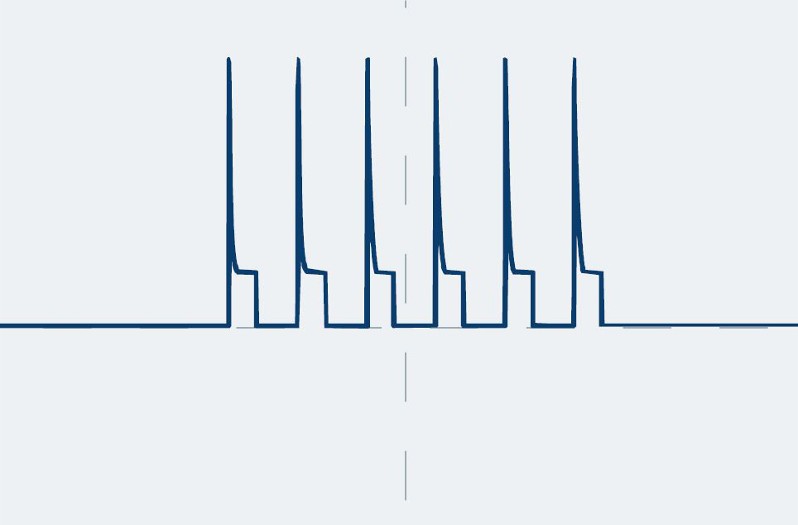
  • Check with the oscilloscope: Connect the measurement line of the oscilloscope to the ground wire of the timed valve.
  • Adjust the measuring range, X-axis = 0.2 seconds, Y-axis = 15 V.

How helpful is this article for you?

Not helpful at all
5
4
3
2
1
Very helpful
Success

Wrong Captcha

Wrong Captcha

Error

Something went wrong

Spare Parts Finder
Manual vehicle identification OE-No.
Top manufacturers
Other manufacturers
Vehicle series Back
Vehicle Back

Enter the OE number in the input field. You will usually find the OE number on the spare part itself or in the vehicle documents.

Spare Parts Finder
Also determine spare parts with OE numbers Detailed product information Find wholesalers near you
dummy
Processing Selected Car
Manufacturer
Vehicle series
Vehicle
Engine output
Engine displacement
Fuel type
Construction year
Engine code

Choose category:
Back
dummy
Teilen Sie
Send via Copy link
URL copied to the clickboard !
Article NUmber
Number
Article Number Was Copied !
Search The Web Mounting Instructions
More Details
Name Value
Less Details

Your Dealer
Autoteile Krammer GmbH
dummy
Lechstraße 1-3
68199 Mannheim
Show Map

You might also be interested in

Tire pressure monitoring system tpms
Basic Knowledge
TPMS – tyre pressure monitoring system
Overview of direct and indirect tire pressure monitoring systems (TPMS) - everything you need to know for the vehicle workshop.
Reading Time: 15 minutes
Electric hatchback actuator
Basic Knowledge
Electric hatchback actuator: troubleshooting
Find out how to systematically diagnose and specifically narrow down common faults in the electric hatchback actuator.
Reading Time: 8 minutes
A vehicle with an active ADAS system recognises pedestrians and e-scooters in urban traffic by means of radar and sensor signals – a good example of autonomous driving and sensor fusion.
Basic Knowledge
ADAS and autonomous driving: an overview for workshops
Everything you need to know about ADAS and autonomous driving: functions, sensor fusion, AI and diagnostic devices – concisely explained for automotive professionals
Reading Time: 14 minutes
HELLA 77 GHz radar sensors: Design, function and applications
Basic Knowledge
Maintenance and diagnostics of 77 GHz radar sensors
Find out how the HELLA 77 GHz radar sensor supports driver assistance systems and accurately identifies objects in any weather conditions. Discover the design, function and applications in the vehicle.
Reading Time: 7 minutes
E-mobility
Basic Knowledge
E-mobility in everyday workshop activities: technology and requirements
Electromobility is changing workshop processes: find out how workshops handle high-voltage systems, new diagnostics procedures and targeted qualifications
Reading Time: 16 minutes
Injection nozzle/injection valve
Basic Knowledge
Injection nozzle/injection valve – Function & checks
Find out how to diagnose a defective fuel injector and replace it in the workshop.
Reading Time: 6 minutes
Basic Knowledge
Checking the exhaust gas temperature sensor
Step-by-step instructions for testing the exhaust gas temperature sensor - shown on the VW Passat 2.0 TDI.
Reading Time: 3 minutes
Accelerator pedal sensor
Basic Knowledge
Accelerator pedal sensor – function & design
Important tips for checking the accelerator pedal sensor and rectifying defects - practical knowledge for your workshop.
Reading Time: 3 minutes
Air-mass sensor
Basic Knowledge
Air-mass sensor - Function & troubleshooting
Learn how to check a mass air flow sensor, detect defective sensors and replace them professionally.
Reading Time: 2 minutes
Camshaft position sensor
Basic Knowledge
Camshaft position sensor - function & troubleshooting
Learn all about the function and testing of the camshaft sensor and possible symptoms of a defect.
Reading Time: 2 minutes

Quick question

How likely is it that you would recommend HELLA?

highly unlikely
very likely
highly unlikely
very likely

Thank you very much!

Your feedback helps us to further develop our services.