Throttle valve switch: Function, fault symptoms and testing instructions

The throttle valve switch informs the engine control unit about the throttle valve position so that the mixture and ignition can be adjusted to suit the respective load. This page explains how the throttle valve switch works and how a fault impacts the running of the engine. You will also find practical tips on how to check the throttle valve switch.

Important safety note

The following technical information and practical tips have been compiled by HELLA in order to provide professional support to vehicle workshops in their day-to-day work. The information provided on this website is intended for suitably qualified personnel only.

1. Functional principle

How the throttle switch works

Throttle valve switches determine the throttle valve position. They are mounted directly on the throttle valve shaft. The various switch positions are transmitted to the engine management control unit and assist in the calculation of the required fuel quantity.

The throttle valve switch houses two switches which are actuated using a switching mechanism. The two switches give the engine management control unit information on the engine operating states "idle" and "full load" to ensure the necessary fuel quantity is accurately calculated.

2. Symptoms

Throttle valve switch faulty

A faulty throttle valve switch can cause the following:

  • Engine switches off during idle
  • Engine lurches under full load
3. Cause of failure

Causes of a faulty throttle switch

The causes of a faulty throttle valve switch could be:

  • Mechanical damage (e.g. due to vibrations)
  • Contact fault at the electrical connection (corrosion, humidity)
  • Contact fault at the internal switch contacts (humidity, contamination)
4. Troubleshooting

Checking the throttle valve switch

The following test steps should be considered during troubleshooting:

1

Check the throttle valve switch

Check the throttle valve switch for correct mounting

2

Check the switching mechanism

Check whether the switching mechanism is actuated by the throttle valve shaft (with the engine switched off, move the throttle valve from the idle limit stop to the full-load limit stop and listen to hear whether the switches are actuated)

3

Check the plug connection

Check the plug connection to ensure it is fitted correctly and for any contamination
4

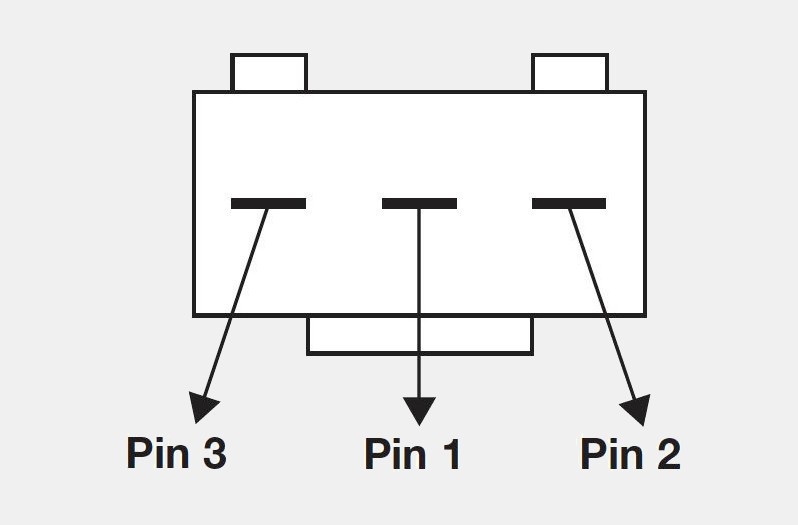
Check the switch contacts using a multimeter Pin assignment

  • Idle switch closed: Measurement between pin 1 and 3. Measured value = >30 MOhm.
  • Idle switch opened: Measurement between pin 1 and 3 (Caution: Slowly open the throttle valve during the measurement until the idle switch opens). Measured value = 0 ohms.
  • Full-load switch opened: Measurement between pin 1 and 2. Measured value = >30 MOhm.
  • Full-load switch closed: Measurement between pin 1 and 2. Measured value = 0 ohms

How helpful is this article for you?

Not helpful at all
5
4
3
2
1
Very helpful
Success

Wrong Captcha

Wrong Captcha

Error

Something went wrong

Spare Parts Finder
OE-No. Manual vehicle identification Universal Parts
Top manufacturers
Other manufacturers
Vehicle series Back
Vehicle Back

Enter the OE number in the input field. You will usually find the OE number on the spare part itself or in the vehicle documents.

Spare Parts Finder
Simple vehicle identification Also determine spare parts with OE numbers Detailed product information
dummy
Processing Selected Car
Manufacturer
Vehicle series
Vehicle
Engine output
Engine displacement
Fuel type
Construction year
Engine code

Choose category:
Back
dummy
Teilen Sie
Send via Copy link
URL copied to the clickboard !
Article NUmber
Number
Article Number Was Copied !
Search The Web Mounting Instructions
More Details
Name Value
Less Details

Your Dealer
Autoteile Krammer GmbH
dummy
Lechstraße 1-3
68199 Mannheim
Show Map

You might also be interested in

Ignition coil
Basic Knowledge
Ignition coil – checking, measuring, faults
Recognize symptoms of a defective ignition coil and get to know ignition coil types - with instructions for troubleshooting and testing.
Reading Time: 14 minutes
Secondary air system
Basic Knowledge
Secondary air injection system: faults & overview
Structure and function of the secondary air system, common fault symptoms and causes of failure - knowledge for your workshop.
Reading Time: 5 minutes
Media pump
Basic Knowledge
Media pump - design, function and troubleshooting
Find out more about the function and system integration of the medium pump as well as testing and repair options.
Reading Time: 7 minutes
Keyless go
Basic Knowledge
Keyless Go & Keyless Entry system
Introduction to the Keyless Go system - from function and possible faults to diagnostics, ideal for vehicle workshops.
Reading Time: 12 minutes
Check electronic boost pressure control turbocharger actuator
Basic Knowledge
Electronic boost pressure control- turbocharger actuator testing
Learn how the electronic boost pressure control works and how the turbocharger actuator is tested on a Mercedes-Benz.
Reading Time: 8 minutes
Tire pressure monitoring system tpms
Basic Knowledge
TPMS – tyre pressure monitoring system
Overview of direct and indirect tire pressure monitoring systems (TPMS) - everything you need to know for the vehicle workshop.
Reading Time: 15 minutes
Basic Knowledge
Checking the exhaust gas temperature sensor
Step-by-step instructions for testing the exhaust gas temperature sensor - shown on the VW Passat 2.0 TDI.
Reading Time: 3 minutes
Injection nozzle/injection valve
Basic Knowledge
Injection nozzle/injection valve – Function & checks
Find out how to diagnose a defective fuel injector and replace it in the workshop.
Reading Time: 6 minutes
TPS sensor
Basic Knowledge
TPS sensor – function & troubleshooting
Learn how to check a throttle potentiometer for defects and recognize the most common symptoms.
Reading Time: 2 minutes
Accelerator pedal sensor
Basic Knowledge
Accelerator pedal sensor – function & design
Important tips for checking the accelerator pedal sensor and rectifying defects - practical knowledge for your workshop.
Reading Time: 3 minutes

Quick question

Great! Just one more Step

Subscription successful

Head to your inbox and confirm your email address so that you don’t miss our updates!

Get ready for brand new technical videos, car repair advice, trainings, helpful diagnostic tips, marketing campaigns and much more... delivered straight to your inbox every two weeks!