HELLA door locks: reliable locking mechanisms for doors and flaps

Locking actuators are key components of contemporary access, convenience and locking systems. They convert electrical signals into mechanical movement, thereby reliably locking and unlocking doors, tailgates, bonnets as well as other vehicle access points. HELLA offers vehicle-specific solutions for a range of installation positions and applications.

Benefits of HELLA door locks

  • Reliable operation: electrically controlled locking and unlocking of various vehicle access points.

  • Versatile applications: used in components including side doors, tailgates, bonnets and sliding doors.

  • Rugged components: reliable actuator mechanisms and stable electrical connections.

  • Vehicle-specific integration: installation in existing vehicle structures and use of existing electrical connections.

Spare Parts Finder
OE-No. Manual vehicle identification Universal Parts

Top manufacturers
Other manufacturers
Vehicle series Back
Vehicle Back

Enter the OE number in the input field. You will usually find the OE number on the spare part itself or in the vehicle documents.

Spare Parts Finder
Simple vehicle identification Also determine spare parts with OE numbers Detailed product information
dummy
Processing Selected Car
Manufacturer
Vehicle series
Vehicle
Engine output
Engine displacement
Fuel type
Construction year
Engine code

Choose category:
Back
dummy
Teilen Sie
Send via Copy link
URL copied to the clickboard !
Article NUmber
Number
Article Number Was Copied !
Search The Web Mounting Instructions
More Details
Name Value
Less Details

Your Dealer
Autoteile Krammer GmbH
dummy
Lechstraße 1-3
68199 Mannheim
Show Map
How does a locking actuator work?

How does a locking actuator work?

A locking actuator is a compact, electromechanical unit. An electric motor drives the mechanical locking mechanism with gears. The actuator can be directly integrated into the lock or mechanically connected to it.

Once the actuator receives an electrical signal – for example, from the central locking system, the radio remote control or a keyless system – it converts this to mechanical movement. This locks or unlocks the lock. Sensors or microswitches may have been incorporated depending on the variant.

How does door closing assistance (soft-close mechanism) work?

How does door closing assistance (soft-close mechanism) work?

Door closing assistance is responsible for the final stage of closing doors or flaps. Once the door has been almost closed, the system identifies the lock status. The motor, gears and soft-close mechanism then automatically pull the door or flap to its end position as part of a controlled process.

Where are HELLA door locks used?

Where are HELLA door locks used?

Locking actuators are used in various parts of the vehicle. Typical applications include the driver and passenger doors, tailgates, bonnets and sliding doors. They are installed on a vehicle-specific basis in the relevant door or flap area using the existing electrical connections.

The HELLA range

The HELLA range

HELLA offers door locks and locking actuators for various installation positions and vehicle applications. The product range includes solutions to electrically lock and unlock as well as – depending on the application – soft-close functions. The product range is consistently enhanced and includes applications for many vehicle manufacturers worldwide.

Additional information about our door locks

Universal parts – spare parts that are not vehicle-specific

Universal parts – spare parts that are not vehicle-specific

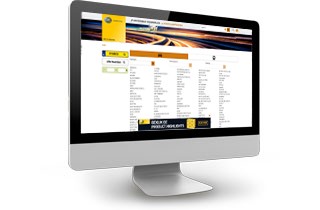
The universal parts catalogue enables you to search for lighting and electrics/electronics products that are not vehicle-specific.

Universal parts catalogue
Vehicle-specific spare parts

Vehicle-specific spare parts

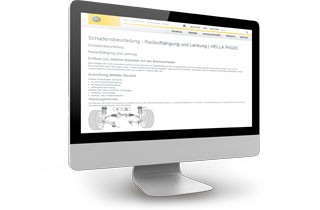
Our online catalogue is designed to make it easier for you to search for spare parts. This means that you can, for example, enter the relevant vehicle by using our comprehensive manufacturer list, the type designation or the engine code.

Vehicle-specific spare parts
Technical product information

Technical product information

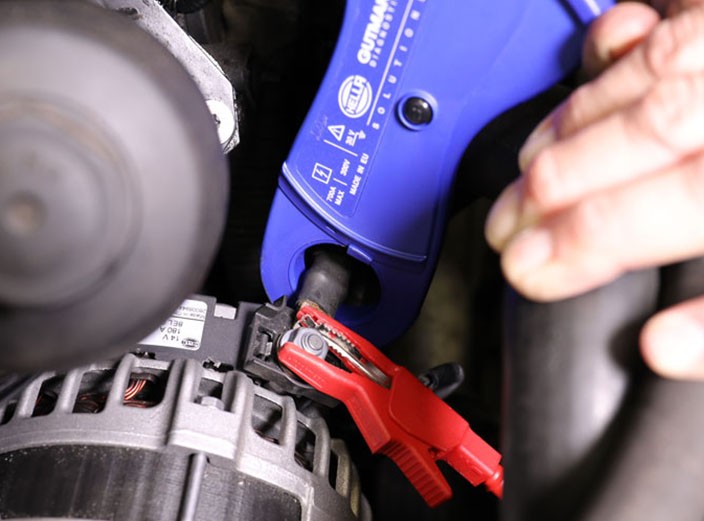
In this database, you will find technical information about our products and specific vehicle systems – prepared by experienced technicians and mechanics.

Technical product information
FAQ

What is the purpose of actuators within the context of locking vehicles?

Actuators are responsible for electrically locking and unlocking doors, tailgates and sliding doors. They represent a key part in central locking systems and form a crucial element of security and convenience.

How does the actuator work?

An integrated electric motor converts electrical control signals (e.g. from radio remote controls or keyless systems) to mechanical action using gears to operate the lock. Sensors can additionally feed back the locking status.

Which actuator types are available?
  • Actuators to lock vehicles: actively lock and unlock
  • Door closing assistance (soft-close functionality): Automatically and conveniently close doors or flaps.

Both variants are available for different areas within vehicles.

Are there differences depending on vehicles or installation location?

Yes, actuators are designed vehicle-specifically. Their differ in design, mechanical connection, electrical interfaces and the respective installation location (e.g. door or tailgate).

Do they require adaptations or teaching in after installation?

In most cases, there is no need for complex teach-in processes as they are accurately fitting spare parts. Correct installation and mechanical adjustment are crucial and some vehicles may require their initialisation.

What are the first signs of a faulty actuator?

Typical indications are failure or a delay in locking, abnormal noises as well as a sporadic or unreliably operating central locking system.

What about troubleshooting (actuators or locks/control units)?

Check the function and signals for diagnostics: If the actuator fails to operate, this frequently indicates an electrical issue. If there are noises, the lock mechanism may be the cause. Systematic troubleshooting helps narrow down the problem.

Typical causes of failure?

Common causes are mechanical wear, electrical defects, humidity or corrosion as well as intensive, day-to-day use.

Further technical information

Checking an alternator regulator
Basic Knowledge
Checking an alternator regulator
Function and design of the overrunning alternator pulley explained - including installation instructions for the overrunning alternator pulley on the alternator.
Reading Time: 12 minutes
Service work on the loading system
Basic Knowledge
Service work on the charging system
Step-by-step instructions for servicing the charging system, including visual inspection and signal testing on the controller.
Reading Time: 6 minutes
Check the starter
Basic Knowledge
Checking the starter - Causes of failure, troubleshooting
Everything you need to know about typical starter motor faults and how to rectify them - with instructions for testing and repair.
Reading Time: 9 minutes
Testing alternators
Basic Knowledge
Checking the alternator
Detailed solutions for problems with the alternator - from testing to troubleshooting, everything for your vehicle workshop.
Reading Time: 8 minutes
Check multifunction controller
Basic Knowledge
Checking the alternator regulator
Find out how to check the multifunction regulator, measure the generator voltage and ensure that the regulator is functioning correctly.
Reading Time: 4 minutes
Starter damage assessment
Basic Knowledge
Starter damage assessment
Starter faulty? Spot typical causes such as overloading or misfiring and find out how to repair damage effectively.
Reading Time: 1 minute
Starter damage assessment
Basic Knowledge
Alternator damage assessment
How to diagnose damage to the alternator: ranging from corrosion and short circuits right up to bearing damage.
Reading Time: 1 minute
Generator freewheel function and installation instructions
Basic Knowledge
Function and assembly of the alternator freewheel clutch explained
Function and design of the overrunning alternator pulley explained - including installation instructions for the overrunning alternator pulley on the alternator.
Reading Time: 2 minutes
Ignition coil
Basic Knowledge
Ignition coil – checking, measuring, faults
Recognize symptoms of a defective ignition coil and get to know ignition coil types - with instructions for troubleshooting and testing.
Reading Time: 14 minutes
Secondary air system
Basic Knowledge
Secondary air injection system: faults & overview
Structure and function of the secondary air system, common fault symptoms and causes of failure - knowledge for your workshop.
Reading Time: 5 minutes

More products

Quick question

Great! Just one more Step

Subscription successful

Head to your inbox and confirm your email address so that you don’t miss our updates!

Get ready for brand new technical videos, car repair advice, trainings, helpful diagnostic tips, marketing campaigns and much more... delivered straight to your inbox every two weeks!