48 V vehicle electrical system – additional voltage level
Key facts at a glance
- Additional voltage level: the 48 V vehicle electrical system complements the conventional 12 V vehicle electrical system and enables elements including recuperation, electric drive boosts, enhanced start/stop as well as coasting functions.
- Key components: the 48 V battery stores electrical energy, the 48 V starter alternator operates as either an alternator or a motor and the DC/DC converter enables energy transfers between the 48 V and 12 V vehicle electrical systems.
- Recuperation and boost: during deceleration, the starter-generator recovers electrical energy and stores it in the 48 V battery. When the vehicle accelerates, this energy can be used to boost the internal combustion engine.
- Systematic diagnostics: troubleshooting begins with a visual inspection of components, cables as well as plug connections and is supplemented by checking the fault memory and assessing relevant parameters and operating states.
- Observe legal requirements: operational and safety strategies may affect diagnostics; following repairs or component replacements, adaptations may be necessary and relevant system functions must be checked once the work is complete.
Important safety information
The following technical information and practical tips have been compiled by HELLA to provide professional support to automotive workshops in their day-to-day operations. The information provided on this website is intended for suitably qualified personnel only.
Basics of the 48 V vehicle electrical system
The 48 V vehicle electrical system complements the conventional 12 V vehicle electrical system in compatible vehicles. It boosts the internal combustion engine in certain driving situations, enables energy recuperation during deceleration and powers high-performance electrical components.
If faults occur in the 48 V system, functions, such as recuperation, the automatic start/stop system or the electric boost for the internal combustion engine may be restricted. The following article sets out the technical principles of the 48 V vehicle electrical system and explains its design, how it works and the interaction between its components.
Interaction between 48 V and 12 V vehicle electrical systems
In vehicles with a 48 V vehicle electrical system, a 12 V and a 48 V voltage level operate together. The 12 V vehicle electrical system remains an integral part that continues to supply power to numerous electrical and electronic components in the vehicle. The additional 48 V voltage level is there to operate electrical components with higher power requirements.
A key advantage of the higher voltage level results from the relationship between voltage, current and electrical power. If the voltage is increased, the same electrical power can be transmitted at a lower current. The 48 V voltage level therefore provides the right conditions for more powerful electrical functions.
The additional 48 V power supply enables functions including recovering and storing energy when the vehicle is decelerating. The stored energy can then be made available again for electrical functions. Depending on the vehicle's design, the additional voltage level enables, elements including electric boosts for the internal combustion engine, extended start/stop operation or coasting.
By recovering and reusing energy, it is possible to reduce fuel consumption and, consequently, cut CO₂ emissions. The 12 V and 48 V vehicle electrical systems are interconnected by a DC/DC converter. It enables energy to be transferred between the two voltage levels.
48 V vehicle electrical system design
The 48 V vehicle electrical system comprises several electrical and electronic components, the layout and design of which vary depending on the vehicle concept. Typical components include the 48 V battery, a 48 V starter-alternator and the DC/DC converter. Depending on the vehicle design, individual component specifications may vary.
Together, these components enable the storage, conversion and distribution of electrical energy within the 48 V system and between the two voltage levels.
Operating states and energy flow in the 48 V vehicle electrical system
48 V vehicle electrical system components work together in different operating states, depending on the driving situation and energy demands. In the process, electrical energy is generated, stored or supplied to boost the drive system. Key functions include recuperation and electric boosts for the internal combustion engine. Depending on vehicle design, the 48 V system also enables enhanced start/stop and coasting functions.
Diagnostics in the daily workshop routine
Maintenance and repair instructions
Vehicle-specific requirements and the relevant system configuration must be taken into account when carrying out maintenance and repair work on the 48 V vehicle electrical system. Electrical connections and plug connections must be clean, free from corrosion and securely connected. Replace damaged cable, plug or hose connections. Tighten fastening elements to the torque specifications provided by the vehicle manufacturer.
Also take into account respective components' thermal management. Different cooling concepts are applied depending on the component and its design. For water-cooled components, the cooling circuit must only be opened once it has cooled down. Following work on the cooling circuit, fill the cooling system, bleed it and check for leaks in accordance with the vehicle manufacturer's specifications. Ensure adequate heat dissipation in the case of air-cooled components. Do not cover air vents and cooling fins and do not prevent them from operating properly.
Following component replacement, it may be necessary to configure adaptations using a suitable diagnostics system, depending on the vehicle and system configuration. Read out the fault memory and check relevant system functions checked after commissioning. In the case of a 48 V starter-alternator, these include elements such as the alternator, charging and starting functions.
Please always follow the maintenance and repair instructions provided by the relevant vehicle manufacturer.
Note on diagnostics:
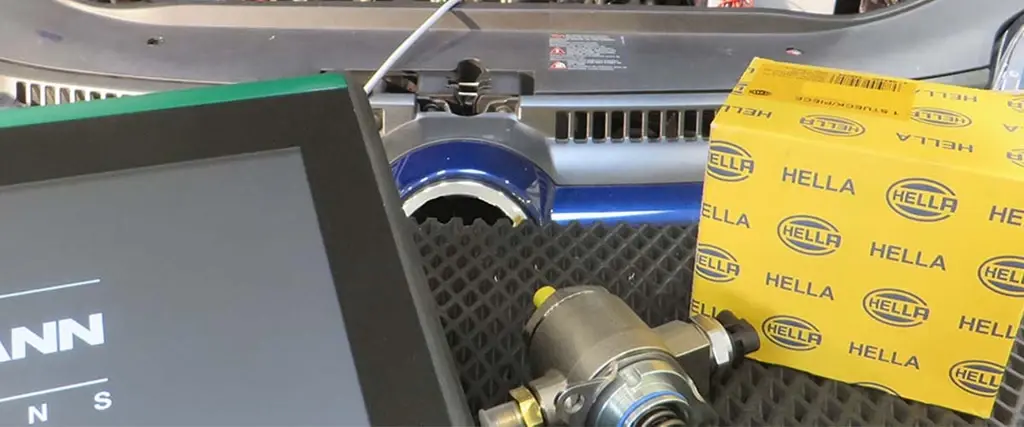
the various diagnostics options have been illustrated as examples using the mega macs S20 diagnostics unit. The respective test depth and variety of functions can differ from vehicle manufacturer to vehicle manufacturer and depend on the respective system configuration of the control unit. Schematic illustrations, images and descriptions serve as explanations and cannot be used as a basis for vehicle-specific repairs.
FAQ – 48 V vehicle electrical system
Both voltage levels operate as an interlinked energy system and they are connected to each other by the DC/DC converter. Depending on the system architecture, disruptions to the 12 V power supply may therefore affect control units, communication or the operational readiness of the 48 V system. Also take into account the 12 V vehicle electrical system during diagnostics, even if fault codes initially point to a 48 V component.
The recuperation performance depends on the condition of the entire 48 V system. If, for example, the battery is currently unable to absorb much energy as a result of its state of charge, its temperature or a system-related limit, the energy management system may reduce recuperation. Limited recuperation is therefore not automatically an indication of a faulty starter-alternator and must be assessed on the basis of the relevant diagnostics parameters.
In belt-driven 48 V starter-generators, mechanical power is transmitted by the belt drive between the internal combustion engine and the starter-generator. Wear and tear, insufficient belt tension or faults in the tensioning and deflection components can therefore affect starter, alternator or auxiliary functions. Carry out electrical troubleshooting and a visual inspection of mechanical components together in these systems before identifying the starter-generator as the fault cause.
The 48 V vehicle electrical system is not necessarily active in all vehicle states. Safety and energy management strategies may deactivate individual components or the entire voltage level, depending on the vehicle's condition. In some vehicles, simply opening the bonnet can trigger such a reaction. Measurements are therefore only conclusive if you know the system state required for the test in question and have established it.
48 V system components are functionally linked and integrated into the vehicle's energy management system. A common cause, such as a lacking power supply or a communication fault, can therefore generate consequential entries in several control units. During diagnostics, the time the fault occurred, the fault status and the system context are more important than looking at each individual fault code in isolation.
No. A 48 V vehicle electrical system is not automatically a high-voltage system. Nevertheless, observe relevant safety requirements when working on the 48 V vehicle electrical system. The system's design and vehicle-specific maintenance and safety requirements of the relevant vehicle manufacturer are determinant.
How helpful is this article for you?
Success
Success
Success
Success
Error
Please tell us what you did not like.
Thank you for your feedback!
Wrong Captcha
Something went wrong
Further technical information


This might also interest you