Vehicle fuel system – design, function, diagnostics and repair
Key facts at a glance
- The fuel supply system as a complete system:
The fuel system stores, filters and delivers the fuel and, depending on the injection system, supplies it at the pressure required for controlled injection. - Low and high-pressure systems working together:
In direct-injection petrol engines and common-rail diesel engines, the electric fuel pump supplies the low-pressure circuit, whilst a high-pressure pump generates the required injection pressure. - Faults can affect the entire functional chain:
Issues starting the engine, drop in performance or pressure fluctuations may be caused by pumps, filters, pipes, pressure control, sensors or injectors, and must be systematically pinpointed. - An error code does not automatically indicate a component fault:
If the fuel pressure is too low, initially check the supply pressure and delivery quantity on the low-pressure side before assessing the high-pressure pump, pressure control and sensors. - Targeted combination of diagnostics methods:
Combine fault memory, real-time data, actuator tests and electrical measurements with pressure and functional tests to narrow down fault causes and avoid unnecessary component replacements.
Important safety information
The following technical information and practical tips have been compiled by HELLA in order to provide professional support to vehicle workshops in their day-to-day work. The information provided on this website is intended for use by suitably qualified personnel only.
Fundamentals and system overview
The fuel system makes sure that the internal combustion engine is supplied with the required fuel quantity. For this purpose, fuel is stored in the tank, filtered, supplied to the engine and, depending on the respective injection system, supplied at the required pressure. The engine control unit regulates subsequent fuel injection in line with the current operating conditions.
Contemporary fuel systems are made up of mechanical, hydraulic and electronic components. Electronically controlled fuel pumps, fuel pressure sensors, fuel level sensors and high-pressure systems have been integrated into vehicle diagnostics. As a result, anomalies can frequently be identified using the fault memory or engine control unit readings.
Fuel system design
As a rule, the fuel system can be divided into fuel delivery and mixture formation sections. Fuel delivery starts at the fuel tank. An electric fuel pump delivers fuel to the engine through filters and pipes . In direct-injection petrol engines and common-rail diesel engines, this low-pressure circuit is linked to a high-pressure system.
Fuel supply system objectives:
- Safely storing fuel and pumping it as required
- Filtering out impurities
- Consistent fuel supply to the fuel pump
- Recording the fuel tank level
Mixture formation involves generating pressure, metering and injecting fuel as required. For this purpose, the engine control unit calculates the injection timing and injection quantity on the basis of various sensor readings.
Mixture formation objectives:
- Generating the required fuel pressure
- Storing and distributing fuel within the rail
- Specifying the injection quantity and injection timing
- Pressure control and monitoring using sensors and control units
Fuel supply
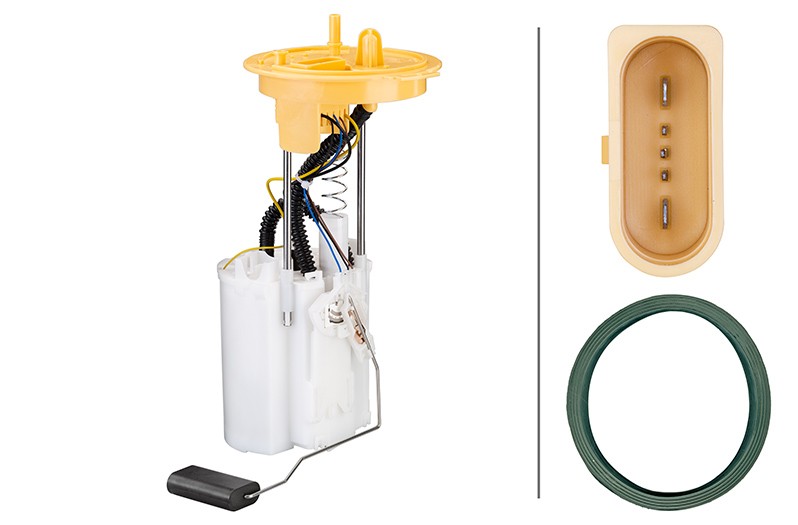
The fuel supply system comprises, in particular, the fuel tank, fuel supply unit, the electric fuel pump, surge tank, fuel lines, fuel filter and fuel level sensor.
Mixture formation
Mixture formation refers to the process of preparing the fuel for optimum combustion inside the engine. In this process, the fuel is metered, mixed with air and fed into the engine in the correct quantity and at the correct time
Petrol engine – intake manifold and direct injection
Fuel is injected into the intake manifold upstream of the intake valve as part of intake manifold injection. The required fuel pressure is generated by the electric fuel supply.
With direct petrol injection, fuel is directly injected into the combustion chamber. A mechanically driven, high-pressure pump is required in addition to the low-pressure system. Depending on engine design and operating conditions, contemporary systems operate at pressures of several hundred bar.
High-pressure pumps and injectors
The high-pressure pump generates the pressure required for direct injection. The injectors then meter the correct amount of fuel for each individual cylinder.
Multiple injections enable elements including pre-injection, main injection and post-injection. This makes it possible to specifically influence the combustion process, developing noise and emissions.
Sensors and engine control unit
The engine control unit regulates fuel pressure and injection based on data from various sensors. These include factors, such as fuel pressure, air mass or intake manifold pressure, crankshaft and camshaft position, engine temperature and lambda sensor values.
Unreliable input signals can affect fuel control, even though the pump or injectors are technically in perfect working order. Checking the sensor readings therefore forms part of systematic diagnostics.
Fuel types and requirements
The various fuel system components must be designed to suit the specific fuel. This applies in particular to seals, pumps, filters, pipes and injection components. Petrol and diesel differ in terms of their ignition properties, lubricity and evaporation properties, as well as their chemical properties in relation to elastomers. Additives, such as ethanol or biogenic fuel components also influence the requirements on materials used.
For this reason, exclusively fuels approved by the vehicle manufacturer for the vehicle in question must be used. Incorrect refuelling or using unauthorised fuels may damage pumps, injectors and other fuel injection system components.
Diagnostics, maintenance and repairs
Conclusion
The fuel system in contemporary vehicles combines fuel storage, controlled delivery and precise injection technology to form a complex, integrated system. For workshops, the interaction between the electric fuel pump, delivery unit, level sensor, pressure control and engine control unit is particularly important.
Successful troubleshooting is therefore not based solely on mechanical tests. Fault memory, real-time data, actuator tests and electrical measurements must be combined with pressure and functional tests. This makes it possible to pinpoint the causes of faults and avoid unnecessary component replacements.
Important!
The information, technical specifications and test procedures set out here are exclusively provided for general technical information purposes and are not a substitute for vehicle-specific repair information. System configuration, operating pressures, diagnostic functions and repair procedures may vary depending on the vehicle manufacturer, model, engine type and year of manufacture.
Always observe vehicle-specific guidelines, safety information and applicable legal requirements during diagnostics, maintenance and repair work. Exclusively work on fuel and high-pressure systems using suitable workshop equipment and after having appropriately qualified.
FAQs – mixture formation
This is because insufficient pre-supply may result in the high-pressure pump not being provided with enough fuel and therefore being unable to build up the required rail pressure. An in-depth assessment of the high-pressure system only makes sense once the supply pressure is correct and the delivery quantity is sufficient.
Because pressure fluctuations can also be caused by a blocked fuel filter, an insufficiently operating pre-supply pump, pipe issues, faulty pressure control, malfunctioning sensors or injectors with internal leaks. Consequently, always test the entire system.
As fuel consumption significantly increases under load, a restricted flow rate, for instance caused by a clogged filter or worn-out pump, only leads to a relevant deviation between pressure setpoint and actual pressure value at an increased volume flow.
An excessively low supply voltage or increased contact resistance may reduce the pump speed and flow rate, even though the fuel pump is mechanically intact. Therefore, test the power supply, ground connection and control system under real operating conditions.
The fuel pump may briefly draw in air whilst cornering, accelerating or braking if the surge tank is not filled to the required level, causing the delivery pressure and delivery quantity to significantly drop and potentially result in sporadic misfires.
An actuator test initially merely confirms that pump control is operational and generally responding. Assess whether it achieves the specified pressure and the required flow rate in the relevant operating conditions on the basis of additional measured values and functional tests.
The engine control unit uses sensor values as control variables for fuel pressure and injection and consequently, faulty input signals may lead to incorrect management of pumps, control valves or injectors, even though the relevant actuators are technically intact.
Particles or trapped air in the fuel system may impair pressure control, put a strain on sensitive high-pressure components and lead to starting problems or pressure fluctuations immediately after repair; a clean working environment is therefore crucial, particularly for common rail systems.
How helpful is this article for you?
Success
Success
Success
Success
Error
Please tell us what you did not like.
Thank you for your feedback!
Wrong Captcha
Something went wrong
Further technical information

This might also interest you