ECE standards for vehicle lighting – practical considerations for workshops

Key facts at a glance

  • ECE and UN regulations govern modern lighting systems:
    The ECE R48, UN R148 and UN R149 regulations govern the installation, light functions and technical requirements of modern vehicle lighting and form the basis for diagnosis, repair and maintenance in the workshop.
  • Hardware, software and coding form a single unit:
    The approved light function is only achieved through the interaction of the light source, optics, electronics, software and the vehicle-specific coding. It only needs incorrect parameter settings to restrict or disable adaptive light functions.
  • Workshop procedures affect the light function:
    Work carried out on lamps, chassis, body, sensors or control units may require coding, calibration or readjustment. A final functional test ensures that the lighting system complies with statutory requirements.
  • Only approved components are granted type approval:
    Unauthorised LED retrofits and also partial repairs to type-approved LED or OLED lamps alter the approved design. In the absence of approved repair procedures, the entire lamp unit should therefore be replaced.
  • Calibration and software testing are an integral part of the diagnostic process:
    Following repairs or software updates, the sensors, coding, headlamp levelling and light pattern must all be checked in accordance with the manufacturer’s specifications, as changes to the light functions do not necessarily indicate a technical fault.

Important safety information

The following technical information and practical tips have been compiled by HELLA in order to provide professional support to vehicle workshops in their day-to-day work. The information provided on this website is intended for use by suitably qualified personnel only.

1. Practical tips

Modern vehicle lighting systems, such as LED, Matrix, OLED or adaptive high beam systems, are now an essential part of active vehicle safety. At the same time, the regulatory requirements for these systems are constantly increasing. ECE and UN regulations define not only the technical design of the lighting, but also its installation, software functions and diagnostic capabilities. For workshops, this means that even minor procedures such as coding, software updates or calibrations can have a direct impact on the approved light function. Errors often arise not because of faulty components, but as a result of discrepancies in the system configuration. A basic understanding of the relevant regulations is therefore essential for the diagnosis, repair and maintenance of modern lighting systems.

2. Basics

The basics of ECE and UN regulations

From the classic ECE regulations to modern UN stipulations

The increasing prevalence of LED, Matrix and OLED systems has significantly changed the photometric requirements in vehicles. Previous individual regulations for various types of lamps were only able to represent modern, software-controlled systems to a limited extent. For this reason, numerous regulations within the UNECE have been combined and modernised. Today it is particularly the UN regulations R148, R149 and R150 that form the basis of modern vehicle lighting. But at the same time, the ECE R48 continues to remain the key installation requirement for lighting equipment.

Significance of ECE R48, UN R148 and UN R149

ECE R48 regulates the installation of lighting systems in vehicles. These include mounting positions, visibility angles, switching logic, and also requirements for automatic headlamp levelling systems and cleaning systems. The UN R148 sets out the technical requirements for light signal devices such as stop lamps and direction indicators. The UN R149, on the other hand, defines the requirements for modern road illumination systems, such as Matrix or adaptive LED lamps. For workshops, this means that both the mechanical installation and also the electronic functioning must comply with statutory requirements.

Differences between European and US regulations

In Europe, UNECE regulations form the basis for type approval. In the USA, on the other hand, FMVSS 108 is used. In addition, SAE standards are used for technical design. The differences lie, in particular, in light distribution and signalling functions. Whilst European systems predominantly use asymmetrical light patterns, US systems are traditionally based on wider light distributions. This can result in impermissible configurations, particularly in the case of imported vehicles or when it comes to coding for other markets.

3. Function

Modern lighting systems as a functional unit

Interaction between hardware, software and coding

Modern lamp systems consist of a light source, optics, electronics and software. It is only the interaction of these components that produces the approved light function. The control units define parameters such as light distribution, segment control and brightness. In addition, vehicle-specific coding plays a part. If a lamp is fitted without the correct parameter setting, adaptive functions may be restricted or disabled. Even spare parts that look identical on the outside do not necessarily produce the same light distribution without the appropriate software.

The importance of type approval in day-to-day workshop practice

Type approval always relates to the complete photometric system. Changes to the light source, software or coding may therefore affect approval. Of particular relevance are unauthorised LED retrofits or modifications to signalling functions. Even slight deviations in glare limits or light colour may fall outside the permissible tolerances.

Workshops should therefore use only approved components and should document any repairs.

The impact of typical workshop procedures on light function

Modern lighting systems are closely linked with the vehicle’s electronics and also with other driver assistance systems. As a result, workshop operations are no longer limited solely to the replacement of mechanical components. So procedures carried out on control units, sensors or chassis components can affect the operation of the vehicle’s lighting system and may require the parameters to be reset or the system to be recalibrated.

A typical example is the replacement of an LED or Matrix lamp. Even if an original spare part of the same design is fitted, vehicle-specific parameters such as light distribution, reference position or equipment specifications must be transferred to the control unit. If this coding is not carried out, or is carried out only partially, it is often the case that only the lamp’s basic functions are available. Adaptive functions such as glare-free high beam, dynamic cornering light or variable light distribution may remain deactivated or may not work correctly.

Work on the vehicle body can also affect light function. Even minor changes to the mounting position of a lamp or a front-facing camera can result in the target values for light distribution or for the environment detection system no longer being met. Following repairs to the front end, the replacement of the windscreen or work on the bumper, it is therefore often necessary to calibrate the relevant systems.

Furthermore, changes to vehicle level affect the lamp adjustment. Chassis repairs, the replacement of chassis components or changes to the vehicle’s height affect the automatic headlamp levelling system. If these changes are not taken into account and the default settings are not reset, the light pattern may deviate from the permitted specifications.

Software updates are also becoming increasingly important in day-to-day workshop operations. Vehicle manufacturers regularly update the control software for lighting systems in order to optimise functions, to comply with legal requirements or to rectify known faults. Following an update, parameters such as segment control, light distribution or glare limits may change. An apparently altered light pattern does not necessarily constitute a technical fault, but may be the result of an updated software version.

A full functional test should therefore be carried out after every repair or new programming. This includes reading out the error memory, checking the coding, testing the headlamp levelling and also inspecting the light pattern using a beamsetter. In the case of adaptive lighting systems, it is also advisable to carry out a functional check of the camera-based or sensor-based light control. Only by carrying out this final inspection can it be guaranteed that the lighting system once again complies with the approved system configuration and that it meets all statutory requirements.

Practical tip:

work carried out on the chassis, the front of the vehicle or on the vehicle’s electronics should always be assessed to determine whether such procedures could affect the lighting system. A final coding, calibration or functional test is often just as important as the actual replacement of the components.

4. Legal requirements

Common sources of error and legal requirements

LED retrofits and unauthorised light sources

Unapproved LED retrofit lamps are among the most common sources of faults in day-to-day workshop operations. The light source, optics and electronics are designed to form a single, tested unit. Even minor changes affect the light distribution and the cut-off line. This may result in increased glare or impermissible light colours. Systems that appear subjectively brighter do not therefore automatically comply with the legal requirements. The use of unauthorised components will result in the operating licence being revoked.

Partial repairs to LED and OLED lamps

Modern LED and OLED lamps are tested and approved as a complete photometric assembly as part of the type approval process. The approval covers the entire system, comprising the light source, optics, light guides, electronics, housing and the resulting light distribution. Only the interaction of all components ensures that the specified photometric properties – in terms of luminous intensity, light colour, luminance and signal visibility – are met.

For this reason, partial repairs to type-approved LED and OLED lamps are, as a basic principle, not permitted. Replacing individual LED modules, OLED surfaces, light guides or electronic components alters the approved design of the lamp. Even if the functionality of individual light segments can be restored, the lamp will not necessarily correspond to the version that was originally tested.

Furthermore, modern LED and OLED lamps are often designed as encapsulated assemblies. Light modules, control electronics and optical components are permanently connected to one another and cannot be separated without being damaged. For this reason, many vehicle manufacturers do not supply individual repair components, but only complete lamp units.

Practical example

Following a minor rear-end collision, just one of the outer light segments on an LED rear lamp has been damaged. The remaining functions continue to work without any problems. However, as the lamp has been type-approved as a complete assembly and the vehicle manufacturer does not provide for the repair of individual components, the entire rear lamp is to be replaced. This ensures that the approved light function – including light distribution, light colour and signal visibility – is maintained.

Repair instructions

Before carrying out any repairs, checks should always be run to see whether the vehicle manufacturer makes provision for a repair procedure regarding the lamp in question. If no relevant approval has been granted, the entire lamp unit should be replaced. This ensures that the photometric properties and the type approval specifications are fully maintained.

Installation instructions and safety-related systems

High-performance lamp systems are subject to additional installation instructions. These include automatic headlamp levelling and also fully functional cleaning systems. Faulty level sensors or a failure to initialise them often leads to complaints. Even if the light pattern is correct, its admissibility may be restricted if these systems are not functioning properly. A complete functional test should therefore always be carried out after repairs.

5. Practical tips

Sensors, calibration and software in practice

How adaptive lighting systems work

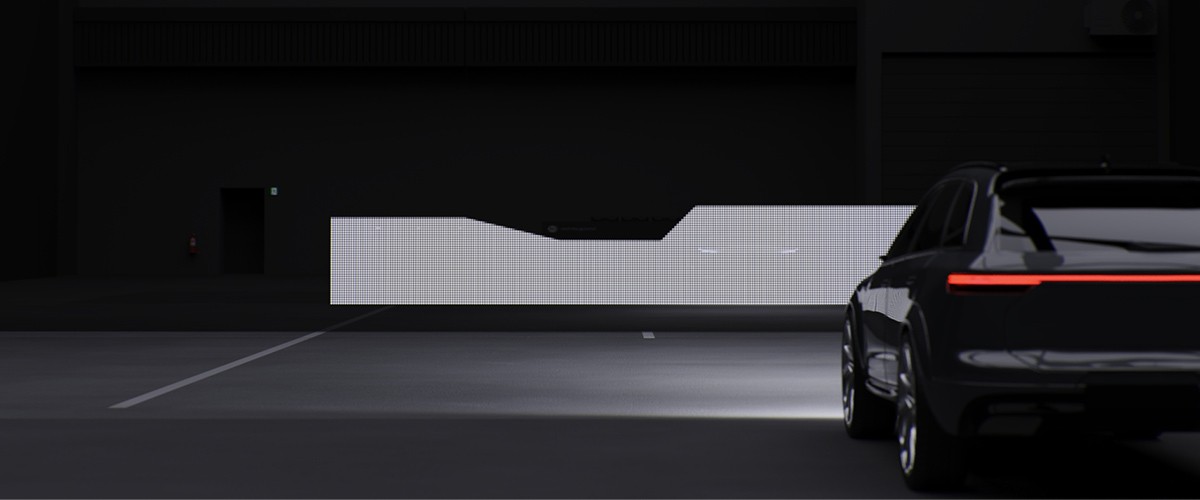
Adaptive lighting systems use cameras and electronic segment control. The sensor system detects other road users and automatically adjusts the light distribution. Individual areas of the high beam can be selectively blanked out without darkening the remaining part of the road. The function is based on continuous communication between the camera, the control unit and the lamp module. Incorrect sensor data often leads to the adaptive functions being deactivated.

Calibration following repair work

Calibration is frequently required following work on the windscreen, chassis or vehicle structure. Changes in the sensor’s position affect perception of the surroundings and, consequently, the light control. If calibration is not carried out, the system frequently switches to a safe operating state. In practice, this often manifests itself as the low beam being switched on continuously, despite the Matrix function being active. Calibration is carried out using a suitable diagnostic device in accordance with the manufacturer’s specifications.

Inspection of light pattern following a software update

Software updates are also having an increasing impact on photometric functions. Following an update, the light distribution may change, even though there is no technical fault. In such cases, the software version and system parameters should be checked first. This is followed by a check of the headlamp levelling system and also a visual inspection using the beamsetter. The current manufacturer’s specifications are always the decisive factor here, and not any previous subjective impression based on the light pattern.

Practical example:

following a service campaign, a vehicle fitted with Matrix LED lamps receives an updated software version for the light control unit. A few days later, a complaint is lodged because the road illumination is subjectively perceived as being shorter in range and less bright.

During the diagnostic process, the current software version and the error memory are checked first. The headlamp levelling system and also the light pattern are then checked using a beamsetter. All the measured values are within the manufacturer’s specifications, and the adaptive high beam functions are also working correctly.

The reason for this change in perception is a light strategy adapted by the vehicle manufacturer. As part of the software update, the segment control and glare limits have been adapted to meet current homologation requirements. The light distribution differs slightly from that of the previous software version, but complies fully with the applicable legal requirements.

This example shows that a light pattern that subjectively looks different does not necessarily indicate a fault with the lamp. Therefore, before the replacing of any components, the software version, the parameter settings and the system functions should always be checked. This is the only way to distinguish between a software modification that still complies with the standards and an actual malfunction.

6. Conclusion

Conclusion

Today ECE and UN regulations are now an integral part of everyday workshop life. Modern lighting systems consist of mechanical, electronic and software-controlled components which, together, produce the approved light function. Many faults are not caused by faulty components, but by incorrect coding, a lack of calibration or unauthorised modifications to the system. A structured diagnosis and adherence to the manufacturer’s specifications help to prevent complaints and to ensure the operational safety of modern lighting systems.

Important!

The information, illustrations and examples of work procedures presented in this article are intended solely to show technical concepts and to provide a general understanding of modern vehicle lighting and also of the underlying ECE and UN regulations. They are not a substitute for vehicle-specific repair, testing or adjustment instructions.

Work on lighting systems, driver assistance systems and their associated sensors and control units must only be carried out in accordance with the specifications of the relevant vehicle manufacturer and by using suitable diagnostic and calibration equipment. In the course of such work, the applicable legal provisions and the relevant manufacturer’s instructions are to be strictly observed.

Vehicle equipment, system functions and diagnostic procedures may vary depending on the manufacturer, model, year of manufacture and software version. Therefore, it is crucial to always follow the vehicle manufacturer’s current repair and service information.

Additional information

Further information on the subject can be found on the pages dealing with the following topics:

Lighting technology - fundamentals & photometric values | HELLA

Lamps - components, types, regulations | HELLA

Adjusting and replacing LED lamps | HELLA

CSC-Tool PRO – fully digital ADAS calibration | Hella Gutmann

7. FAQ - Frequently Asked Questions

FAQ – ECE standards and the legal framework for modern vehicle lighting

1. Why were the previous ECE regulations supplemented or replaced by UN regulations R148, R149 and R150?

As part of the ongoing development of the UNECE regulations, the previous ECE regulations were consolidated and updated into UN regulations R148, R149 and R150. The aim was to create a technology-neutral set of regulations that would provide a uniform framework not only for conventional lighting systems, but also for LED, Matrix and OLED technologies, and indeed for any future developments. Such a system would then harmonise the photometric requirements and type approval procedures for modern lighting systems, thus providing a clearer structure.

2. What are the subjects covered by ECE regulation R48 compared with UN regulations R148 and R149?

ECE R48 specifies how lighting equipment has to be fitted and operated on a vehicle. This includes mounting positions, switching conditions and additional systems such as headlamp levelling or lamp cleaning. UN regulations R148 and R149, on the other hand, set out the technical requirements for the individual lamps and their photometric properties.

3. Why does type approval always relate to the complete lighting system or the approved type of lamp, and not just to individual components?

The photometric properties are only achieved through the interaction of the light source, optics, electronics and software all located within the approved lamp type. Even minor changes to any one of these components can affect light distribution, the glare limit or the colour of the light. Type approval in accordance with the relevant UN regulations therefore relates to the tested lamp, or more specifically to the approved system type. The requirements for fitting approved lamps to a vehicle are also laid down in ECE regulation R48.

4. What does the E certification symbol on a lamp mean?

The E certification symbol confirms that the lamp in question has valid type approval in accordance with the relevant UNECE regulations. Furthermore, the marking provides information on the country which has granted approval and also gives details on the approved light functions. It makes it easier for workshops to identify approved components.

5. Why can software changes affect the type approval of a lighting system?

In modern lighting systems, the software forms an integral part of the approved system functionality. Among other things, it controls light distribution, segment activation and adaptive functions. Changes to the parameter settings or to the software may therefore affect the homologated light characteristics and must only be carried out in accordance with the manufacturer’s specifications.

6. Why do additional legal requirements apply to Matrix LED and adaptive lighting systems?

Adaptive systems alter their light distribution depending on driving conditions and traffic situations. In order to ensure that other road users are not dazzled, the relevant UN regulations set out detailed requirements regarding function, switching logic, glare limitation and system monitoring.

7. Why are automatic headlamp levelling and lamp cleaning systems mandatory for certain lighting systems?

High-performance lighting systems produce high levels of luminous intensity. Even slight changes in the vehicle’s inclination or dirty cover lenses can lead to impermissible glare. The statutory requirements therefore stipulate – depending on the lighting system in question – that additional features have to be included so as to ensure that light distribution complies with the relevant standards.

8. Why do European UNECE regulations differ from the US FMVSS 108?

Both sets of regulations have the same aim, i.e. to ensure road safety, but differ in terms of their photometric requirements. There are differences, for example, in light distribution, signalling effect and permitted switching functions. That is why coding systems or components from different markets are not necessarily compatible with one another.

9. Why is it often not permitted to repair LED and OLED lamps?

The photometric properties are tested and homologated for the complete assembly or more specifically for the approved lamp type. Replacing individual LED modules or optical components may alter the tested properties. Without a repair procedure approved by the vehicle or lamp manufacturer, it is therefore routinely no longer possible to ensure compliance with the type approval. Workshops should therefore adhere to the relevant manufacturers’ specifications.

10. What significance do ECE and UN regulations have for diagnostics in day-to-day workshop practice?

The regulations set out requirements not only for the design but also for the functioning of the system as a whole. When a diagnosis is carried out, it is therefore necessary to assess mechanical, electronic and software-related factors together. A repair carried out in accordance with standards therefore often involves not only replacing components but also coding, calibration and functional testing.

Spare Parts Finder
OE-No. Manual vehicle identification
Top manufacturers
Other manufacturers
Vehicle series Back
Vehicle Back

Enter the OE number in the input field. You will usually find the OE number on the spare part itself or in the vehicle documents.

Spare Parts Finder
Simple vehicle identification Also determine spare parts with OE numbers Detailed product information
dummy
Processing Selected Car
Manufacturer
Vehicle series
Vehicle
Engine output
Engine displacement
Fuel type
Construction year
Engine code

Choose category:
Back
dummy
Share
Send via Copy link
URL copied to the clickboard !
Article NUmber
Number
Article Number Was Copied !
Search The Web Mounting Instructions
More Details
Name Value
Less Details

Your Dealer
Autoteile Krammer GmbH
dummy
Lechstraße 1-3
68199 Mannheim
Show Map

This might also interest you

Headlamp technologies in electric vehicles
Basic Knowledge
Headlamp technologies in electric vehicles
Find out how innovative LED and software lamps make electric cars safer and smarter.
Reading Time: 7 minutes
Signal lights in cars
Basic Knowledge
Car indicators & signal lights: regulations, faults, tests
A general guide to headlight adjustment - with video and tips on optimising light distribution for your workshop.
Reading Time: 6 minutes
Adaptive headlights
Basic Knowledge
AFS headlights: Adaptive lighting system explained
Discover how AFS headlights work and what you need to know about the Advanced Frontlighting System.
Reading Time: 5 minutes
Audi A6 matrix LED headlights
Basic Knowledge
Audi A6 Matrix LED Headlights – Technology & Repair
LED headlamps or the control units have to process a multitude of data from different in-vehicle sources in order to calculate and realise the individual light functions.
Reading Time: 9 minutes
Xenon headlights
Basic Knowledge
Xenon headlights – function and retrofitting
Everything you need to know about xenon headlights, from the function of the ballasts to retrofitting instructions and bi-xenon systems.
Reading Time: 5 minutes
Install daytime running lights
Basic Knowledge
Daytime running lights: Retrofitting, installation, coding
Find out how to retrofit daytime running lights, including video instructions, regulations and coding instructions for the workshop.
Reading Time: 10 minutes
Headlamp cleaning system
Basic Knowledge
Headlamp cleaning system: Faults, testing
Find out all about headlight cleaning systems, how they work, common causes of failure and repair tips.
Reading Time: 4 minutes
Adjusting headlamps – instructions
Basic Knowledge
Headlamp adjustment – instructions
A general guide to headlight adjustment - with video and tips on optimising light distribution for your workshop.
Reading Time: 13 minutes
Headlights
Basic Knowledge
Headlight lens components, types & regulations
Comparison of the four most important headlamp systems, including regulations for vehicle lighting - knowledge for the vehicle workshop.
Reading Time: 10 minutes
Light distribution
Basic Knowledge
Light distribution - dipped beam & main beam
Find out all about the light distribution of dipped and main beam as well as special light systems such as country road lights.
Reading Time: 7 minutes

Quick question

Great! Just one more Step

Subscription successful

Head to your inbox and confirm your email address so that you don’t miss our updates!

Get ready for brand new technical videos, car repair advice, trainings, helpful diagnostic tips, marketing campaigns and much more... delivered straight to your inbox every two weeks!