Danos frequentes no motor de arranque: Identificar causas e danos

Important safety note

The following technical information and practical tips have been compiled by HELLA in order to provide professional support to vehicle workshops in their day-to-day work. The information provided on this website is intended for use by suitably qualified personnel only.

Starter damage assessment

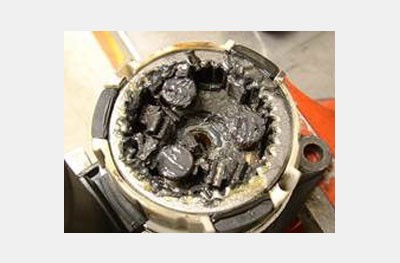
Starter “pasting”

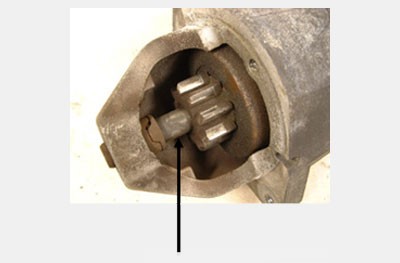
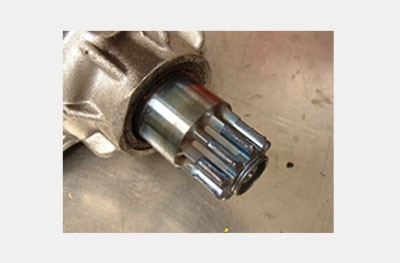
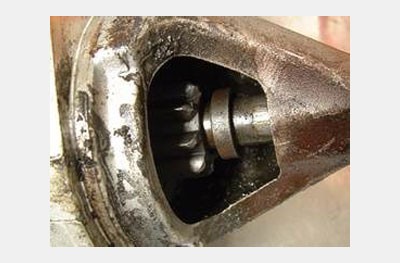
Starter “pasting” can be detected from increased noise and damaged starter pinions. In extreme cases, the motor ring gear may also be severely damaged.

Causes: “Pasting” is caused by a combination of dirt (clutch dust/abrasion, whirled-up road dust) in the clutch housing and grease on the armature shaft, the counter shaft, the steep thread and in the one-way clutch. This compound produces a paste that can no longer be lubricated.

Effects: Due to the formation of this paste, which can no longer be lubricated, the function of the starter, especially the freewheel gear and the steep thread, is impaired to such an extent that the starter pinion disengages too slowly from the engine ring gear. This results in the faults mentioned above. These can usually only be remedied by replacing the starter.

Use only greases suitable for this application or supplied by the manufacturer. Make sure that all cover plates and sealing plugs of the clutch housing are present and properly installed. If the starter is renewed, the clutch housing should be cleaned to avoid premature "pasting"

Damage to starters with ferrite magnets

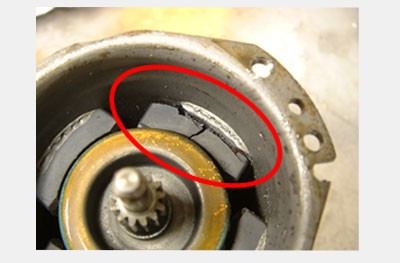
In some starter types, the copper or aluminium field windings are replaced by ferrite magnets. Broken ferrite magnets are a damage pattern that occurs frequently with this starter type. This causes the magnets to detach from the housing and break.

Causes and effects: Impacts and/or blows cause the damage patterns mentioned above. The destroyed ferrite magnets lead to total failure of the starter. As a matter of principle, a "function test" using hammer blows or similar on the starter housing or the solenoid switch should not be performed for these starter types. Letting them drop onto the floor can also cause damage.

Engine with misfires

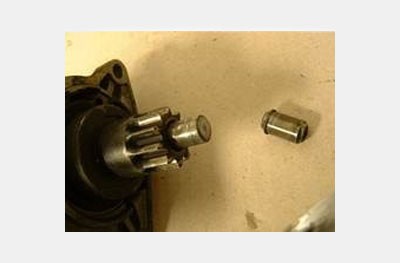
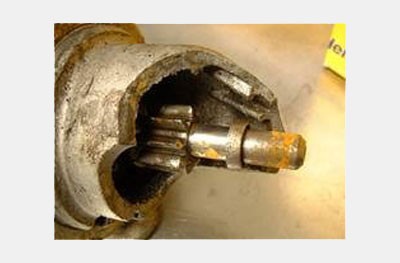
A misaligned ignition or injection pump can cause damage to a starter. Common damage patterns are destroyed freewheels and planetary gears as well as broken armature shafts and bearing bells.

Causes: Misfiring or an incorrectly set injection/ignition timing can cause the engine to kick back during the starting process. At this point, a force is applied to the starter against its direction of rotation. This loads the freewheel in the locking direction, which forwards the force to the housing via the armature shaft. Since the starter can only absorb these forces to a limited extent, this leads to the damage patterns mentioned above

Effects: The mechanical damage results in considerable noise and even total failure of the starters.

Starter overrun

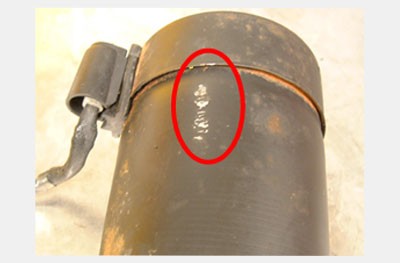
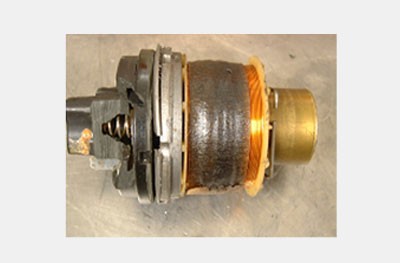
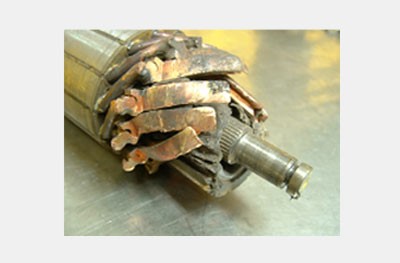
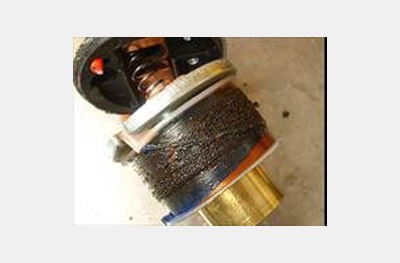
Overrun starters can be identified by discolouring on the one-way clutch/pinion, traces of scuffing on the armature shaft, an ejected commutator/armature winding and/or a burnt solenoid switch coil.

Causes: Overrun starters can have technical causes or be caused by incorrect operation. A jammed ignition/start switch, short circuits in the wiring or operating the starter for too long will cause it to remain on after the engine has started. The enormous centrifugal forces destroy the winding and/or the commutator. Discolouration of the engaging relay’s coil insulation indicates a continuous current.

Effects: Destruction of the commutator and/or winding as well as overheating of the coil will lead to total failure of the starter.

Starters with oil contamination

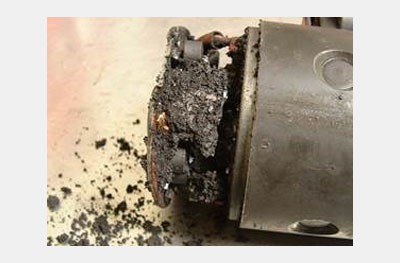
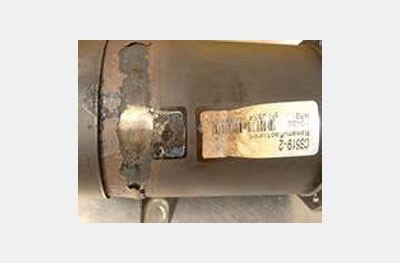
A starter contaminated with oil can be identified by oil deposits in the bearing bell and in the starter. In extreme cases, it can also be identified immediately by an oil film or oil drops on the starter. The customer often notices this fault when the starter is performing poorly.

Causes: In most cases, oil contamination is caused by leaks in the engine. A leaking crankshaft oil seal is the main cause in particular. The escaping oil is thrown into the starter by the flywheel.

Effects: The oil that has penetrated the starter causes the carbon brushes to soften, resulting in increased abrasion. The carbon abrasion forms a conductive mass together with the oil, which leads to short circuits and contact problems. In most cases, this results in total failure.

Overloaded starters

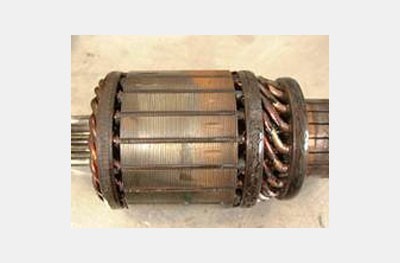
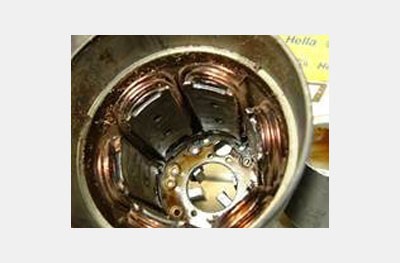
An overloaded starter can usually be identified by discolouring on the armature, a burnt field winding and a discoloured or a burnt solenoid switch coil. These are characteristics that indicate a high thermal load.

Causes: Starters are generally designed for short-time operation only. A continuous load due to an engine that starts poorly or not at all (incorrect setting, faults in the fuel supply, ignition system, mechanical faults) leads to overheating.

Effects: The consequential damage resulting from this overheating is usually short circuits due to the insulation burning. This leads to a total failure of the starte.

Overloaded starters

An overloaded starter can usually be identified by discolouring on the armature, a burnt field winding and a discoloured or a burnt solenoid switch coil. These are characteristics that indicate a high thermal load.

Causes: Starters are generally designed for short-time operation only. A continuous load due to an engine that starts poorly or not at all (incorrect setting, faults in the fuel supply, ignition system, mechanical faults) leads to overheating.

Effects: The consequential damage resulting from this overheating is usually short circuits due to the insulation burning. This leads to a total failure of the starte.

Overloaded starters

An overloaded starter can usually be identified by discolouring on the armature, a burnt field winding and a discoloured or a burnt solenoid switch coil. These are characteristics that indicate a high thermal load.

Causes: Starters are generally designed for short-time operation only. A continuous load due to an engine that starts poorly or not at all (incorrect setting, faults in the fuel supply, ignition system, mechanical faults) leads to overheating.

Effects: The consequential damage resulting from this overheating is usually short circuits due to the insulation burning. This leads to a total failure of the starte.

Overloaded starters

An overloaded starter can usually be identified by discolouring on the armature, a burnt field winding and a discoloured or a burnt solenoid switch coil. These are characteristics that indicate a high thermal load.

Causes: Starters are generally designed for short-time operation only. A continuous load due to an engine that starts poorly or not at all (incorrect setting, faults in the fuel supply, ignition system, mechanical faults) leads to overheating.

Effects: The consequential damage resulting from this overheating is usually short circuits due to the insulation burning. This leads to a total failure of the starte.

Overloaded starters

An overloaded starter can usually be identified by discolouring on the armature, a burnt field winding and a discoloured or a burnt solenoid switch coil. These are characteristics that indicate a high thermal load.

Causes: Starters are generally designed for short-time operation only. A continuous load due to an engine that starts poorly or not at all (incorrect setting, faults in the fuel supply, ignition system, mechanical faults) leads to overheating.

Effects: The consequential damage resulting from this overheating is usually short circuits due to the insulation burning. This leads to a total failure of the starte.

Overloaded starters

An overloaded starter can usually be identified by discolouring on the armature, a burnt field winding and a discoloured or a burnt solenoid switch coil. These are characteristics that indicate a high thermal load.

Causes: Starters are generally designed for short-time operation only. A continuous load due to an engine that starts poorly or not at all (incorrect setting, faults in the fuel supply, ignition system, mechanical faults) leads to overheating.

Effects: The consequential damage resulting from this overheating is usually short circuits due to the insulation burning. This leads to a total failure of the starte.

Link to tip

Here you will find tips and remedies for specific starter symptoms and causes for the failure of a defective motor . In addition, we show you on this page how to check the charging system , such as carrying out a visual inspection before diagnosis, testing the batteries, performing the alternator test and testing with the diagnostic device. You can find more product information about starters and alternators from Hella here.

Até que ponto este artigo é útil para si?

Não ajuda em nada
5
4
3
2
1
Muito útil
Sucesso

Wrong Captcha

Wrong Captcha

Erro

Algo correu mal

Localizador de peças sobressalentes
Número da matrícula Identificação manual do veículo OE-no.

Insira o número da matrícula do seu veículo no campo de entrada. Encontrará o número da matrícula no documento de registo do veículo.

Erro

Infelizmente, o seu veículo não foi encontrado. Certifique-se de que os dados introduzidos estão corretos ou tente novamente.

Principais fabricantes
Outros fabricantes
Série de veículos Voltar
Veículo Voltar

Insira o número OE no campo de entrada. Normalmente, encontrará o número OE na própria peça sobressalente ou nos documentos do veículo.

Localizador de peças sobressalentes
Identificação simples do veículo com matrícula Determine também as peças sobressalentes com números OE Informações detalhadas sobre o produto Encontre grossistas perto de si
dummy
Processing Selected Car

Escolher categoria:
Voltar
dummy
Partilhar
Enviar por Copiar link
URL copiado para o clipboard!
Número do item
Number
O número foi copiado para a sua área de transferência!
Pesquisar na web Instruções de montagem
Mais detalhes
Nome do produto Valor
Menos detalhes

O seu revendedor
Autoteile Krammer GmbH
dummy
Lechstraße 1-3
68199 Mannheim
Mostrar mapa

You might also be interested in

Verificar o regulador multifuncional
Conhecimentos básicos
Verificar o regulador multifuncional
Descubra como verificar o regulador multifuncional, medir a tensão do gerador e garantir que o regulador está a funcionar corretamente.
Tempo de leitura: 5 minutos
Assistente de mudança de faixa
Conhecimentos básicos
Assistente de mudança de faixa
Saiba tudo sobre o assistente de mudança de faixa - instruções de diagnóstico e reparação, complementadas por um vídeo claro.
Tempo de leitura: 15 minutos
Substituir a buzina
Conhecimentos básicos
Substituir a buzina — Instruções
Instruções passo a passo para substituir a buzina em vários modelos, como o Audi TT/RS e o Grand Cherokee.
Tempo de leitura: 5 minutos
Sistema de ar secundário
Conhecimentos básicos
Sistema de ar secundário — Funcionamento e detecção de erros
Estrutura e função do sistema de ar secundário, sintomas de avarias comuns e causas de falhas – conhecimentos para a sua oficina.
Tempo de leitura: 6 minutos
Tire pressure monitoring system tpms
Conhecimentos básicos
TPMS – tyre pressure monitoring system
Overview of direct and indirect tire pressure monitoring systems (TPMS) - everything you need to know for the vehicle workshop.
Tempo de leitura: 10 minutos
Sensor de NOx – Mercedes Benz
Conhecimentos básicos
Sensor de NOx – Mercedes Benz
Se for diagnosticada uma falha no sensor de NOx durante a resolução de problemas num sistema de purificação de gases de escape, isso pode representar um pequeno desafio para uma oficina.
Tempo de leitura: 7 minutos
Keyless go
Conhecimentos básicos
Sistema Keyless Go & Keyless Entry
Introdução ao sistema Keyless Go – desde o funcionamento e possíveis avarias até ao diagnóstico, ideal para oficinas automóveis.
Tempo de leitura: 13 minutos
Reservatório de carvão ativado
Conhecimentos básicos
Reservatório de carvão ativado — Funcionamento e detecção de erros
Tudo sobre o recipiente de carvão ativado: como funciona, sintomas típicos de avaria e causas em caso de avaria – incluindo dicas para oficinas.
Tempo de leitura: 3 minutos
Recirculação dos gases de escape
Conhecimentos básicos
Recirculação dos gases de escape — Válvula EGR
Tudo sobre o sistema de recirculação de gases de escape: causas de válvulas EGR defeituosas, sua inspeção e substituição – conhecimentos para a oficina automóvel.
Tempo de leitura: 13 minutos
Bomba de direção hidráulica
Conhecimentos básicos
Bomba de direção hidráulica — Avisos de reparação
Bombas hidráulicas de direção: estrutura, função e causas comuns de falha - incluindo dicas para teste e reparação.
Tempo de leitura: 5 minutos

Ótimo! Só mais um passo

Subscrição bem-sucedida

Aceda à sua caixa de entrada e confirme o seu endereço de e-mail para não perder as nossas atualizações!

Aguarde novos vídeos técnicos, conselhos sobre reparação automóvel, formação, dicas úteis de diagnóstico, campanhas de marketing e muito mais... diretamente na sua caixa de entrada, a cada duas semanas!