Mazda 3 — A capacidade de refrigeração diminui durante a condução | HELLA
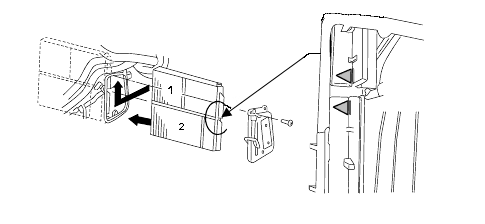
MazdaMazda 3A partir do ano de fabrico 2006A capacidade de refrigeração diminui durante a conduçãoNos veículos supramencionados, a capacidade de refrigeração do ar condicionado pode diminuir durante uma viagem mais longa (ar condicionado na potência máxima). Isto pode ser causado pelo congelamento do evaporador do ar condicionado.Outra característica deste problema pode ser uma tubagem de baixa pressão coberta por uma camada de gelo.As possíveis fontes de erro são o sensor de temperatura do evaporador e também uma distribuição de ar desigual no evaporador.Este problema pode ser resolvido através da substituição do sensor (incl. resistência) e da instalação de um filtro do habitáculo com uma melhor distribuição de ar.- BP8P-61-J6X Conjunto de filtros com placa de difusão- BPY-61545A Cablagem com resistênciaO fabricante do veículo recomenda o seguinte ajuste.Anotar o código do rádioDesconectar os polos negativos da bateria e aguardar, pelo menos, 5 minutosRetirar o painel lateral do lado do acompanhanteDesmontar a caixa de derivação e soltar o estribo em açoDesconectar o conector do sensor de temperatura do evaporador e retirar o Power Mosfet (se estiver equipado com sistema automático de climatização)Retirar a cobertura da caixa do evaporadorAgora, retirar os filtros superior e inferior do ar condicionadoInstalar os novos filtros com placa de difusão (Figura 1), assegurando que as setas no filtro apontam para trás (Figura 2). Instalar novamente a cobertura da caixa do evaporadorUnir a cablagem, incl. resistência, ao conector. Em seguida, conectar ambos ao sensor de temperatura do evaporadorPor fim, instalar novamente as restantes peças desmontadas e verificar o funcionamento do ar condicionadoFigura 1Figura 2
Mazda 3
From model year 2006 onwards
Cooling capacity diminishes while driving
In the course of a longer journey made in one of the above-mentioned vehicles (with the air-conditioning running at full speed), it is possible that the cooling capacity of the air-conditioning system begins to diminish. A reason for this can be the freezing of the evaporator.
Another sign indicating this problem is the presence of a layer of ice forming on the low pressure line.
Possible causes of this trouble are faulty temperature sensors on the evaporator and also an uneven distribution of air flowing through the evaporator.
This problem can be solved by renewing a sensor that has to be correctly adjusted (including its resistance) and by replacing the interior filter to achieve improved air distribution.
- BP8P-61-J6X Filter set with diffusion plate
- BPY-61545A Wiring harness with resistance
In these cases the following adjustments are recommended by the vehicle manufacturer.
- Make a note of the radio code
- Disconnect the negative poles of the battery and wait at least 5 minutes
- Remove the side panel on the passenger side
- Remove the junction box and loosen the metal bracket
- Undo the plug of the temperature sensor on the evaporator and remove the power MOSFET transistor (when automatic air-conditioning is present)
- Remove the cover of the evaporator box
- Now take out the upper and lower filters of the air-conditioning system
- Insert the new filters with the diffusion plate (Fig. 1) and make sure that the arrows on the filter are pointing in the direction of the rear (Fig. 2). Replace the cover on the evaporator box
- Connect the short wiring harness including resistance with the plug. Then connect both with the temperature sensor on the evaporator
- Finally reassemble all the remaining parts that have been removed and run a check to test how the air-conditioning system now works
Figure 1
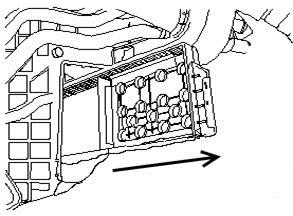
Figure 2