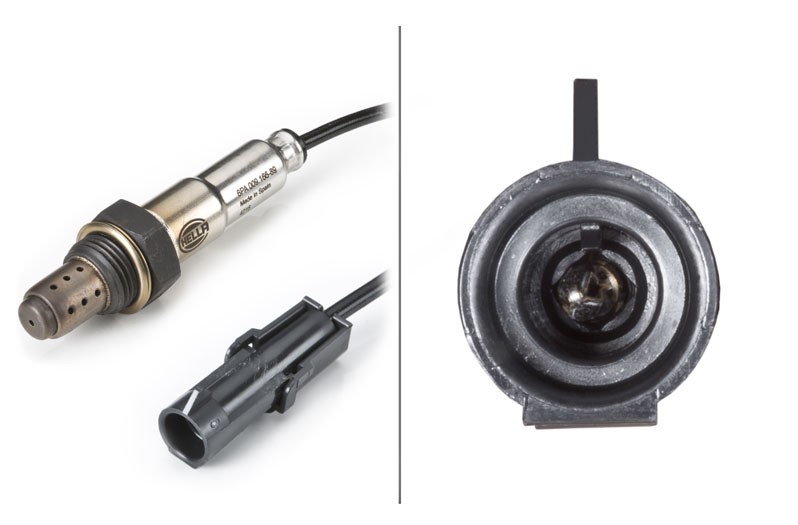
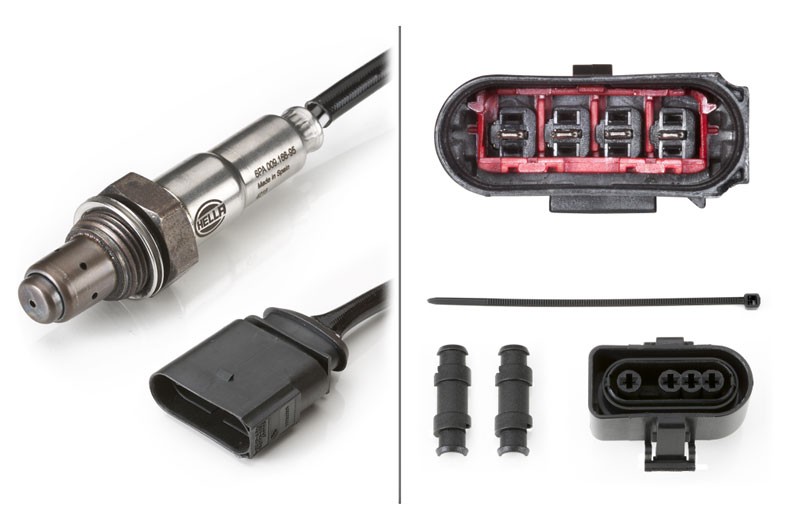
Lambda sensors

HELLA satisfies the increased demands for intelligent vehicle electronics solutions with a wide-ranging, innovative sensor portfolio covering accelerator pedal sensors, position sensors, steering sensors, medium sensors, air-conditioning sensors and rain/light sensors.

Many leading automotive manufacturers have already been trusting HELLA's electronics know-how in automotive original equipment and our longstanding development and product expertise in this area for many years.

HELLA's lambda sensors also meet the highest quality standards and are optimally matched to state-of-the-art engine and exhaust system requirements ─ for an optimal fuel mixing ratio, affordable emission values and, not least, the lowest possible emissions.

Spare Parts Finder
OE-No. Manual Vehicle Identification Universal Parts
Top manufacturers
Other manufacturers
Vehicle series Back
Vehicle Back

Enter the OE number in the input field. You will usually find the OE number on the spare part itself or in the vehicle documents.

Spare Parts Finder
Simple vehicle identification Also determine spare parts with OE numbers Detailed product information Find wholesalers near you
dummy
Processing Selected Car
Manufacturer
Vehicle series
Vehicle
Engine output
Engine displacement
Fuel type
Construction year
Engine code

Choose category:
Back
dummy
Share
Send via Copy link
URL copied to the clickboard !
Article NUmber
Number
Article Number Was Copied !
Search The Web Mounting Instructions
More Details
Name Value
Less Details

Your Dealer
Autoteile Krammer GmbH
dummy
Lechstraße 1-3
68199 Mannheim
Show Map

  • Leading supplier for independent aftermarket
  • Applications available for all European, American and Japanese brands
  • HELLA lambda sensors impress with their long service life, high reliability and optimal harmonization with the respective engine
  • Customers can benefit from lower emissions, improved engine efficiency and optimized performance

Universal parts – spare parts that are not vehicle-specific

Universal parts – spare parts that are not vehicle-specific

The universal parts catalogue enables you to search for lighting and electrics/electronics products that are not vehicle-specific.

Universal parts catalogue

Vehicle-specific spare parts

Vehicle-specific spare parts

Our online catalogue is designed to make it easier for you to search for spare parts. This means that you can, for example, enter the relevant vehicle by using our comprehensive manufacturer list, the type designation or the engine code.

Vehicle-specific spare parts
Technical product information

Technical product information

In this database, you will find technical information about our products and certain vehicle systems ─ prepared by experienced technicians and mechanics.

Technical product information

FAQ – Frequently Asked Questions about the oxygen sensor

What is the functional role of an oxygen sensor?

An oxygen sensor is a critical component of the engine management system, continuously measuring residual oxygen levels in exhaust gases. This real-time data enables the ECU to precisely regulate the air-fuel mixture, ensuring optimal combustion efficiency, reduced emissions, and improved fuel economy.

Can oxygen sensors be classified based on their position in the exhaust system?

Yes. Oxygen sensors are typically categorized into two groups:

  • Upstream sensors, located before the catalytic converter, which measure raw exhaust gases and support real-time mixture control.
  • Downstream sensors, positioned after the catalytic converter, which monitor the efficiency of the emission control system.
What is the difference between upstream and downstream oxygen sensors?

Upstream sensors provide immediate feedback for air-fuel ratio adjustments, directly influencing engine performance. Downstream sensors evaluate catalytic converter efficiency by monitoring treated exhaust gases, ensuring compliance with emission standards.

Are HELLA oxygen sensors vehicle-specific?

Yes. Oxygen sensors are engineered for specific engine types, vehicle platforms, and emission regulations. Accurate application matching—preferably via OE reference or VIN—is essential to ensure correct functionality and reliable performance.

What are the typical symptoms of a faulty oxygen sensor?

Common indicators include:

  • Increased fuel consumption
  • Reduced engine performance
  • Elevated exhaust emissions

Not all failures will trigger a dashboard warning, making diagnostic checks essential.

Can a faulty oxygen sensor damage other component?

Yes. Incorrect sensor signals can lead to improper combustion, resulting in excessive fuel consumption, increased emissions, and potential damage to critical exhaust components such as the catalytic converter—or, in severe cases, engine damage.

Are HELLA oxygen sensors supplied ready for installation?

HELLA oxygen sensors are delivered as plug-and-play solutions, including application-specific sealing components and pre-applied, sensor-safe anti-seize compound, ensuring fast, safe, and contamination-free installation.

How often should an oxygen sensor be replaced?

Service life depends on sensor technology, engine type, and operating conditions. As a general guideline, zirconia sensors typically require replacement around 150,000 km, while harsher operating environments may reduce lifespan. Regular diagnostics are recommended.

What causes premature oxygen sensor failure?

Key factors include:

  • Contamination from oil or coolant leaks
  • Poor fuel quality or additives
  • Silicone or sealant exposure
  • Excessive soot due to improper combustion
  • Mechanical damage during handling or installation
Can a faulty oxygen sensor affect emissions testing and fuel consumption measurements?

Yes. Incorrect sensor readings disrupt mixture control, leading to increased emissions and unstable combustion. This can result in failed emissions inspections and inaccurate fuel consumption data during diagnostics.

Further technical information

Tire pressure monitoring system tpms
Basic Knowledge
TPMS – tyre pressure monitoring system
Overview of direct and indirect tire pressure monitoring systems (TPMS) - everything you need to know for the vehicle workshop.
Reading Time: 15 minutes
Adaptive cruise control
Basic Knowledge
Adaptive Cruise Control - adjusting sensor
How to set the ACC radar sensor correctly - with step-by-step instructions and valuable practical tips for the garage.
Reading Time: 4 minutes
HELLA 77 GHz radar sensors: Design, function and applications
Basic Knowledge
Maintenance and diagnostics of 77 GHz radar sensors
Find out how the HELLA 77 GHz radar sensor supports driver assistance systems and accurately identifies objects in any weather conditions. Discover the design, function and applications in the vehicle.
Reading Time: 7 minutes
Nitrogen oxide sensor NOx sensor
Basic Knowledge
NOx sensor - troubleshooting and repair instructions
Everything about the NOx sensor: how it works, typical causes of failure, symptoms and fault diagnosis with the control unit.
Reading Time: 8 minutes
NOx sensor - Mercedes Benz
Basic Knowledge
NOx-Sensor - Mercedes Benz
If a fault is diagnosed in the NOx sensor when troubleshooting an exhaust gas purification system, this can present a small challenge for a workshop.
Reading Time: 7 minutes
E-mobility
Basic Knowledge
E-mobility in everyday workshop activities: technology and requirements
Electromobility is changing workshop processes: find out how workshops handle high-voltage systems, new diagnostics procedures and targeted qualifications
Reading Time: 16 minutes
A vehicle with an active ADAS system recognises pedestrians and e-scooters in urban traffic by means of radar and sensor signals – a good example of autonomous driving and sensor fusion.
Basic Knowledge
ADAS and autonomous driving: an overview for workshops
Everything you need to know about ADAS and autonomous driving: functions, sensor fusion, AI and diagnostic devices – concisely explained for automotive professionals
Reading Time: 14 minutes
Electric hatchback actuator
Basic Knowledge
Electric hatchback actuator: troubleshooting
Find out how to systematically diagnose and specifically narrow down common faults in the electric hatchback actuator.
Reading Time: 8 minutes
Replacing the horn
Basic Knowledge
Replacing the horn - Instructions
Step-by-step instructions for replacing the horn on various models such as the Audi TT/RS and Grand Cherokee.
Reading Time: 5 minutes
Check multifunction controller
Basic Knowledge
Checking the alternator regulator
Find out how to check the multifunction regulator, measure the generator voltage and ensure that the regulator is functioning correctly.
Reading Time: 4 minutes

Other products

Quick question

Great! Just one more Step

Subscription successful

Head to your inbox and confirm your email address so that you don’t miss our updates!

Get ready for brand new technical videos, car repair advice, trainings, helpful diagnostic tips, marketing campaigns and much more... delivered straight to your inbox every two weeks!