
Checking the exhaust gas temperature sensor

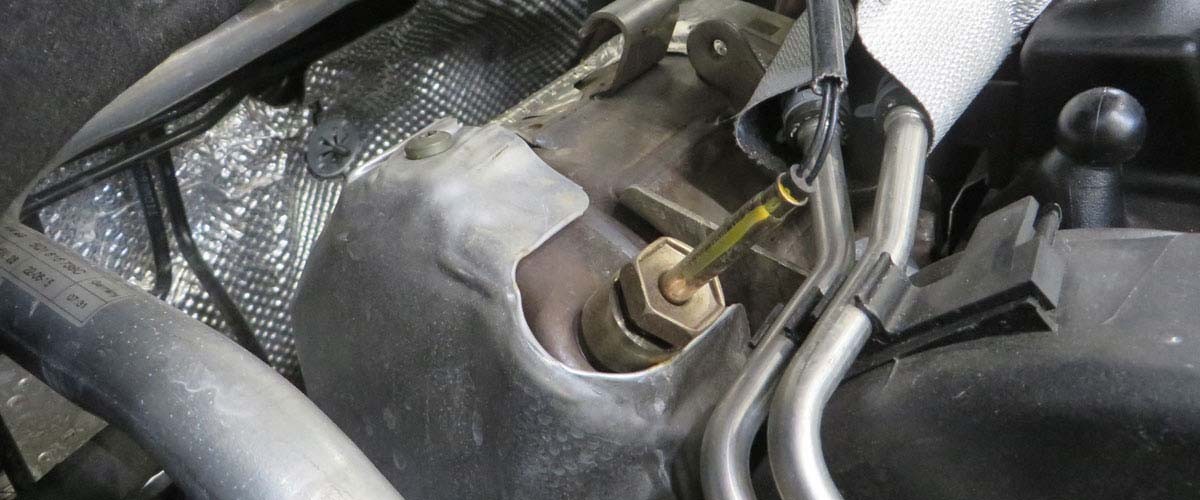
In modern vehicle models, exhaust gas temperature sensors are installed at various points in the exhaust gas system in both diesel and petrol vehicles. The exhaust gas temperature sensor detects the temperature, for example, in front of the catalytic converter or diesel particulate filter and sends this as a voltage signal to the engine control unit. The engine control unit needs this information in order to control the air-fuel ratio or the particulate filter regeneration and thus effectively reduce emissions. In addition, high temperature sensors protect components in the area of ​​the hot exhaust gas flow from critical overheating.

Important safety note

The following technical information and practical tips have been compiled by HELLA in order to provide professional support to vehicle workshops in their day-to-day work. The information provided on this website is intended for suitably qualified personnel only.

1. Design and function

Exhaust gas temperature sensor

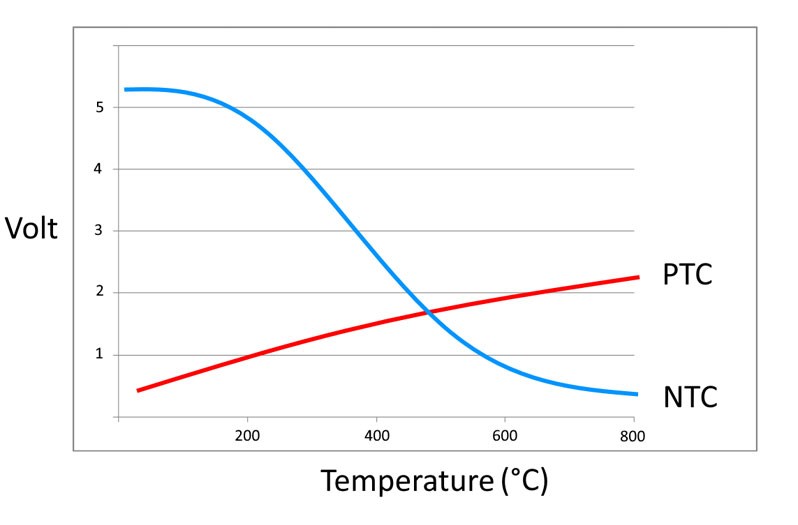
An electrical resistor is installed in the measuring tip of the exhaust gas temperature sensor, the value of which changes depending on the temperature. These resistors are called thermistors and are divided into two groups. Here a distinction is made between NTC thermistors and PTC thermistors, depending on their temperature behaviour ( Figure 1 ).

NTC - resistor with negative temperature coefficient (the resistance decreases with increasing temperature)

PTC - resistor with positive temperature coefficient (the resistance increases with increasing temperature)

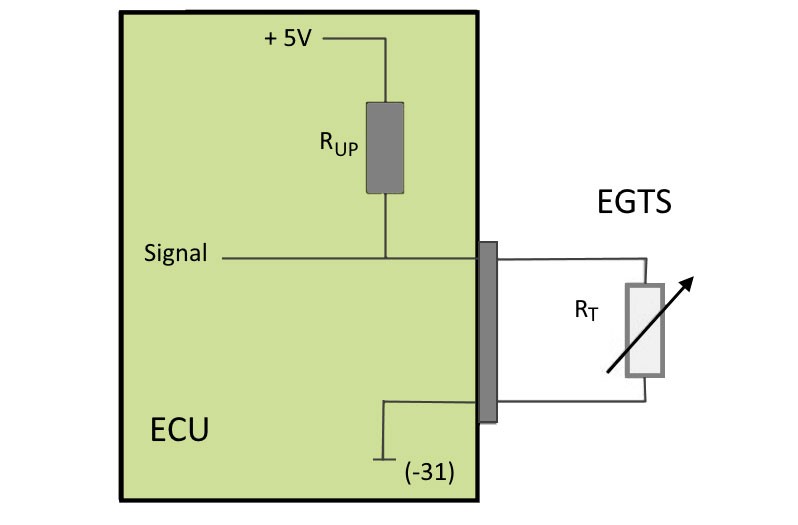
The exhaust gas temperature sensor (EGTS) is usually connected directly to the engine control unit (ECU). Together with another resistor (RUP) in the control unit, the sensor forms a series connection through which an electrical voltage is divided. The signal is measured at the voltage divider and converted into temperature information by an algorithm ( Figure 2 ).

2. Effects

Exhaust gas temperature sensor - Symptoms

The following effects can occur in the event of an exhaust gas temperature sensor failure:

  • Warning lamp for glow plug system flashes
  • Warning lamp for particulate filter lights up
  • Engine control lamp is on
  • Increase in exhaust emissions (CO, NOx and HC)
  • Poor driving behaviour because of shortened regeneration intervals of the particulate filter 
  • Increased fuel consumption caused by longer particulate filter regeneration
  • Loss of performance caused by incorrect detection of the degree of saturation of the particulate filter
3. Causes of failure

Exhaust gas temperature sensors - defective

The following causes can be responsible for the failure of the exhaust gas temperature sensor:

  • Power supply faulty
  • External damage
  • Internal damage to the electrical wiring caused by strong vibrations in the exhaust gas system
  • Excessively high exhaust gas temperatures as a result of defects in the injection system or in the air-fuel mix
4. Troubleshooting

Checking the exhaust gas temperature sensor

System overview

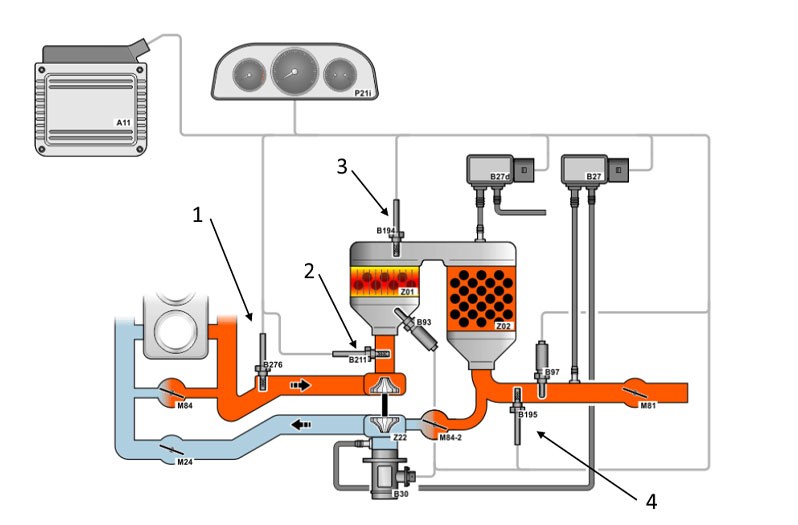
The following information is illustrated using a VW Passat 2.0 16 V TDI from the year 2015 as an example. Depending on the vehicle features, up to four exhaust gas temperature sensors can be installed. Engine control monitors the temperature before the catalytic converter, turbocharger and also upstream and downstream of the diesel particulate filter.

In vehicles without a SCR (Selective Catalytic Reduction) catalytic converter, the exhaust gas temperature sensor behind the diesel particulate filter is not required. In the event of a defective exhaust gas temperature sensor or in the case of implausible output values, the system switches to emergency operation or alternatively uses a substitute value to protect the relevant components from overheating. An error entry is then recorded in the engine control unit and the warning lamp in the dashboard is activated.

Testing with the diagnostic unit

The function of the exhaust gas temperature sensor is monitored by the respective higher-level system control unit. Any errors that occur are stored in the error memory of the control unit and can be replaced by using a suitable diagnostic unit. Depending on the system, additional parameters can be displayed and used for troubleshooting.

1

Error code

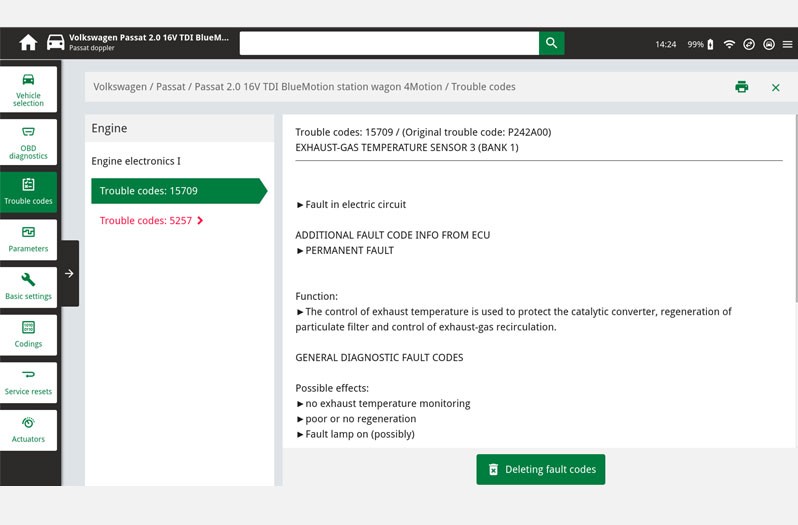
In this function the error codes stored in the error memory can be read out and deleted. In addition, information on the error code can be called up.

  • In our case study the error codes 15709 and 5257 are displayed, codes which indicate a fault in exhaust gas temperature sensor 3.
2

Parameters

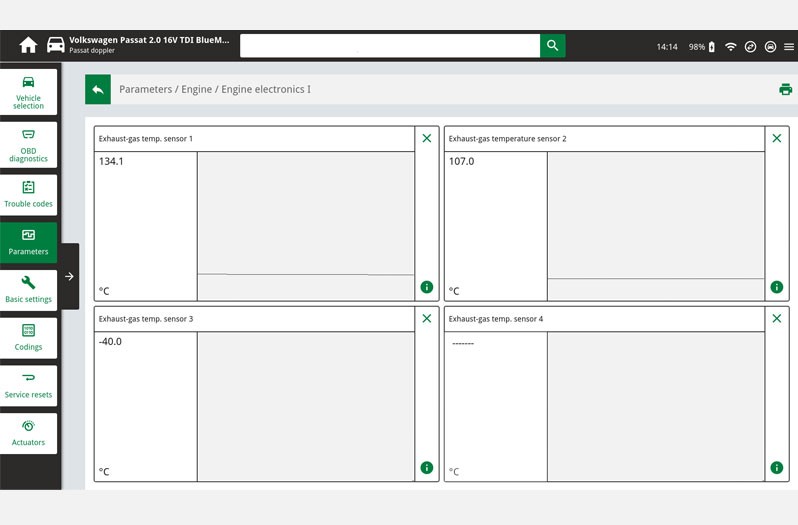
In this function, the current measured values of the sensor in the control unit can be displayed and evaluated.

  • Illustration shows a vehicle with three exhaust gas temperature sensors
  • Sensor 3 shows a value of minus 40 degrees, which may be due to an interruption in the electrical wiring or to a defect in the sensor.

3

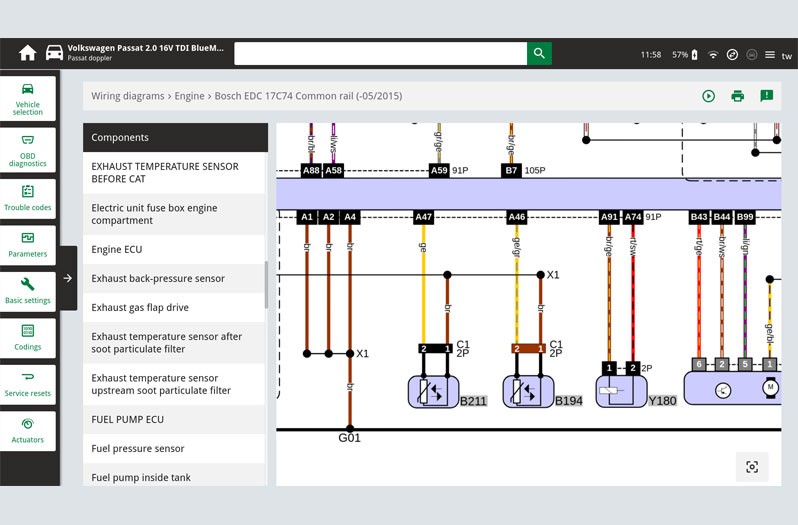
Circuit diagrams

System-specific circuit diagrams can be taken from vehicle information and used for troubleshooting purposes. Here the PIN assignment on the exhaust gas temperature sensor or the cable colours can be read off and used for further tests.

Maintenance and repair instructions!

  • As part of troubleshooting, a visual inspection of the components and peripherals in the engine compartment should first be carried out after the ECU diagnosis.
  • The sensor should be replaced if the connecting cable or sensor housing is damaged.
  • If the threads of the exhaust gas temperature sensors are coated, they must not be treated with an extra coating of hot thread paste.
  • Exhaust gas temperature sensors must be tightened to the specified tightening torque! We recommend a tightening torque of 40 - 45 Nm for HELLA exhaust gas temperature sensors.

Please also observe the respective maintenance and repair instructions provided by each individual vehicle manufacturer!

Important!

The various diagnostic options have been illustrated using the mega macs 77 diagnostic unit as an example. The respective test depth and variety of functions can be set out differently depending on the vehicle manufacturer and is dependent on the relevant system configuration of the control unit.

Schematic illustrations, pictures and descriptions serve to explain and illustrate the document text and cannot be used as a basis for vehicle-specific repairs.

How helpful is this article for you?

Not helpful at all
5
4
3
2
1
Very helpful
Success

Wrong Captcha

Wrong Captcha

Error

Something went wrong

Spare Parts Finder
Oe-No. Manual vehicle identification Universal Parts
Top manufacturers
Other manufacturers
Vehicle series Back
Vehicle Back

Enter the OE number in the input field. You will usually find the OE number on the spare part itself or in the vehicle documents.

Spare Parts Finder
Simple vehicle identification Also determine spare parts with OE numbers Detailed product information Find wholesalers near you
dummy
Processing Selected Car
Manufacturer
Vehicle series
Vehicle
Engine output
Engine displacement
Fuel type
Construction year
Engine code

Choose category:
Back
dummy
Teilen Sie
Send via Copy link
URL copied to the clickboard !
Article Number
Number
Article Number Was Copied !
Search The Web Mounting Instructions
More Details
Name Value
Less Details

Your Dealer
Autoteile Krammer GmbH
dummy
Lechstraße 1-3
68199 Mannheim
Show Map

You might also be interested in

Basic Knowledge
E-mobility in everyday workshop activities: technology and requirements
Electromobility is changing workshop processes: find out how workshops handle high-voltage systems, new diagnostics procedures and targeted qualifications
Reading Time: 16 minutes
Starter damage assessment
Basic Knowledge
Alternator damage assessment
How to diagnose damage to the alternator: ranging from corrosion and short circuits right up to bearing damage.
Reading Time: 1 minute
Starter damage assessment
Basic Knowledge
Starter damage assessment
Starter faulty? Spot typical causes such as overloading or misfiring and find out how to repair damage effectively.
Reading Time: 1 minute
Intake-air temperature sensor
Basic Knowledge
Intake-air temperature sensor - checking & faults
Discover how to check the intake air temperature sensor for defects and how to replace it efficiently.
Reading Time: 3 minutes
TPS sensor
Basic Knowledge
TPS sensor – function & troubleshooting
Learn how to check a throttle potentiometer for defects and recognize the most common symptoms.
Reading Time: 2 minutes
Coolant temperature sensor
Basic Knowledge
Coolant temperature sensor testing
Instructions for testing the coolant temperature sensor with a multimeter - diagnosis and repair for your workshop.
Reading Time: 3 minutes
What is a lambda sensor?: Comprehensive technical information
Basic Knowledge
Lambda sensor testing and troubleshooting
Find out how to check and measure lambda sensors - with step-by-step instructions for fault diagnosis.
Reading Time: 14 minutes
Air-mass sensor
Basic Knowledge
Air-mass sensor - Function & troubleshooting
Learn how to check a mass air flow sensor, detect defective sensors and replace them professionally.
Reading Time: 2 minutes
Idle speed controllers / idle speed actuators
Basic Knowledge
Idle speed controller & actuator - function & check
Everything you need to know about testing and troubleshooting idle speed regulators: function, typical symptoms and repair tips for your workshop.
Reading Time: 3 minutes
Camshaft position sensor
Basic Knowledge
Camshaft position sensor - function & troubleshooting
Learn all about the function and testing of the camshaft sensor and possible symptoms of a defect.
Reading Time: 2 minutes

Quick question

How likely are you to recommend our company to others?

highly unlikely
very likely
highly unlikely
very likely

Thank you very much!

Your feedback helps us to further develop our services.