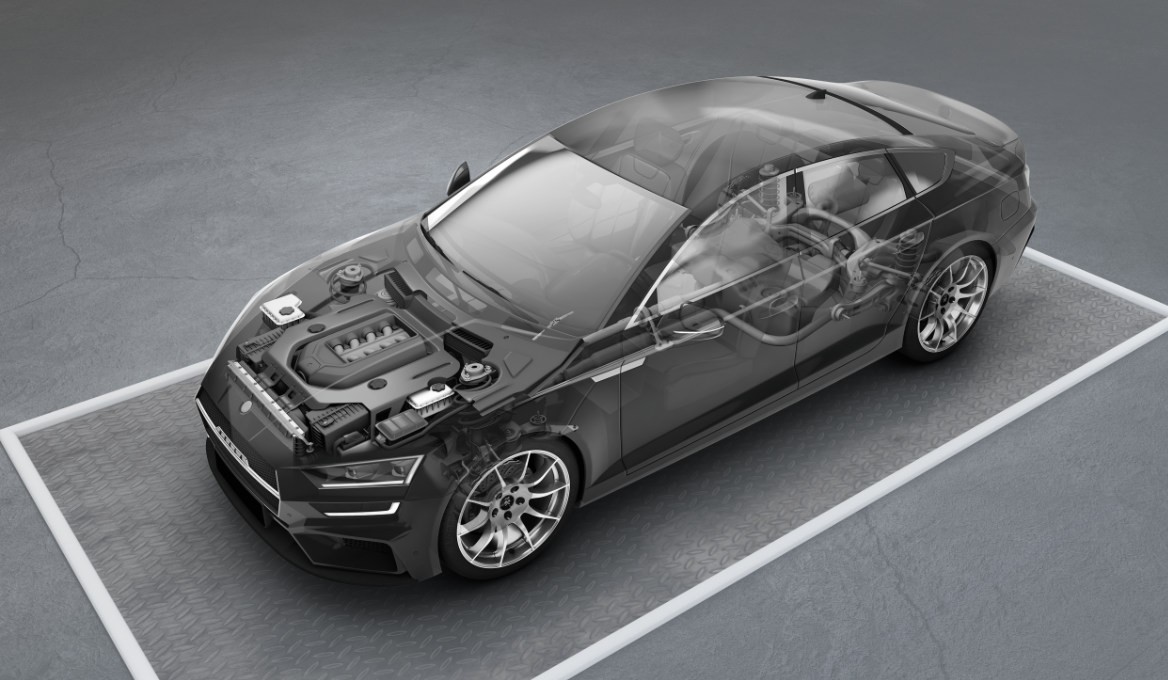
Sensors and actuators - comparing the senses and muscles of modern vehicles
Modern vehicles consist of complex, technically sophisticated networks. Sensors and actuators have to work together perfectly for everything to operate reliably: Sensors provide the necessary information and actuators convert this into actual movement. Without one, the other won't work - and if you understand both systems, you'll have a clear advantage when it comes to quick and accurate fault diagnosis.
Sensors measure - actuators move
Sensors act as the vehicle's senses. They record data, such as temperature, pressure, air mass or position, and transmit this to the control unit as electrical signals. Signal types range from simple voltages to complex digital messages on CAN or LIN bus systems.
Actuators are the executing elements. They convert control commands into mechanical, electrical or hydraulic movement – for instance in the EGR valve, throttle valve actuator or the air-conditioning system. Actuation is provided by the control unit, usually by PWM signals or direct power supply
Perfect interaction - and how to identify it
Whether NOx sensor and EGR valve, wheel speed sensor and ABS valve or temperature sensor and air-conditioning flap actuator: Sensors and actuators always work as a team. Recording an incorrect value or incorrectly carrying out a movement can make the entire system malfunction.
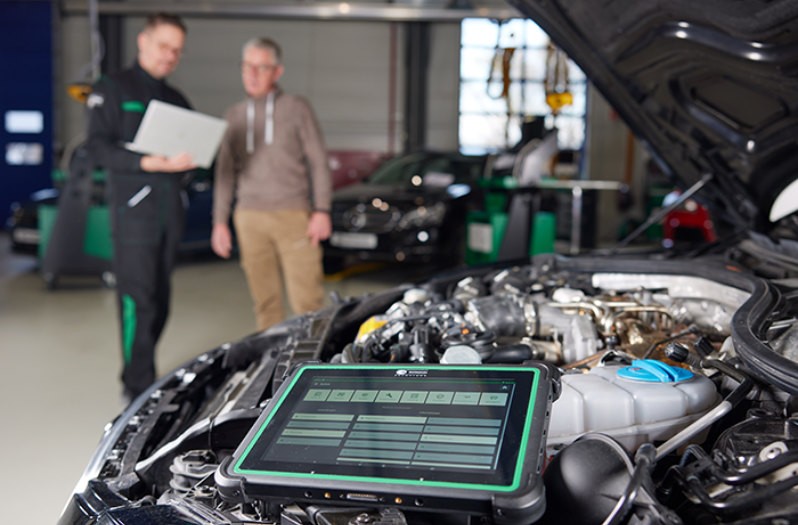
In workshops, this means: Clear-cut diagnosis requires a look at both sides – input signals and reaction. And this is where experience comes into play. If you know how systems are intertwined, you will not only find the fault, but also its cause.
Sensor or actuator? - Narrow down sources of errors as part of a targeted process
Diagnosis usually starts with the fault memory – however, it must not stop there. Live data, multimeters or oscilloscopes help with sensor technology to check values and evaluate signal plausibility. Frequent causes are cable breaks, loose contacts contamination.
In terms of actuators, the focus is on function: Can the component be actuated with the actuator test? Are there mechanical or electrical faults? Measuring the voltage, visual inspection and – if necessary – calibration after replacement are part of daily activities in this context.
Bottom line: Expertise makes the difference
Sensors and actuators form the vehicle's nervous system and muscles. Understanding both areas will enable you to reliably diagnose faults – and save time as well as money in the process.
HELLA provides support – with expertise, technology and tools
Whether it's sensors or actuators: HELLA offers practical diagnostic solutions, technical data, training and support. Making processes at workshops even more efficient – and giving you access to reliable information and tools at all times.