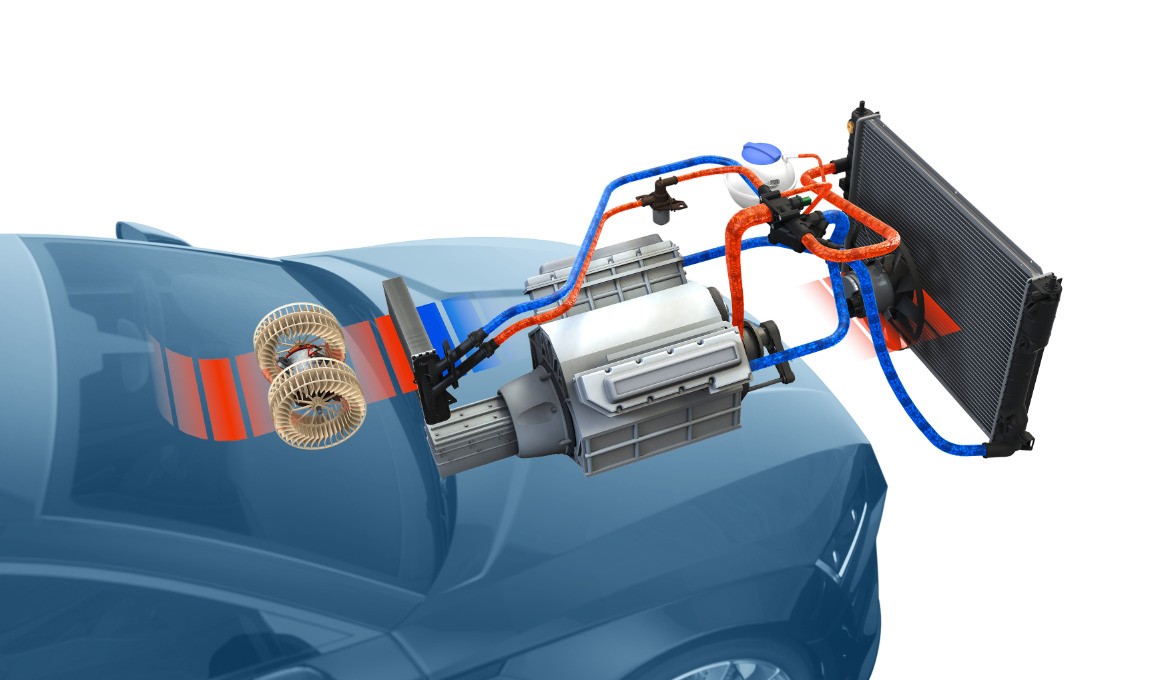
Engine cooling reimagined – a decisive success factor for modern workshops
The demands placed on automotive workshops have changed massively in recent years. Vehicles have become much more technologically complex, and the issue of engine cooling has taken on a central role – regardless of whether it is a question of classic combustion engines, hybrid vehicles or fully electric models. For workshops this means the following: specialist knowledge in thermal management is more important today than ever before.
New opportunities for workshops thanks to modern cooling technology
When it comes to combustion engines, cooling technology has developed significantly in recent years. Cutting-edge, electronically controlled cooling circuits, variable water pumps and intelligent thermostats influence not only the temperature, but also consumption, performance and exhaust gas management.
This opens up new service opportunities for workshops: from professional cooling system checks through diagnosis of electronic components right up to preventive maintenance, which can indeed prevent engine damage and costly repairs.
Complex cooling requirements in hybrid vehicles
Hybrid vehicles bring with them additional challenges. They combine two completely different drive systems, each of which has its own thermal requirements. The battery, power electronics, electric engine and combustion unit often require separate cooling circuits. For the workshop this means extra knowledge is needed: more expertise in the area of sensor technology, coolant types and in the diagnosis of several cooling circuits working in parallel.
Those who demonstrate expertise in all this are viewed as a reliable partner for drivers of modern vehicles – thus securing a clear competitive edge.
Efficient temperature control as a prerequisite for range and service life
Cooling also plays a key role in electric vehicles (BEV). Contrary to what is often assumed, electric cars do not require less service, but often even more expertise in the area of thermal management. The temperature stability of the high-voltage battery is crucial for range, charging speed and service life. At the same time, power converters, onboard chargers and electric engines also generate heat that needs to be dissipated. For workshops, this means increasing demand for services such as coolant service for HV batteries, diagnosis of high-voltage pumps, testing of cooling plates and repair of temperature sensors.
The trend is very obvious: thermal management is a key topic in vehicle system technology. Well-trained staff, state-of-the-art diagnostic equipment and a broad understanding of different cooling architectures are increasingly becoming a quality feature for workshops. Customers count on their vehicles staying efficient, safe and enjoying a long service life – and engine cooling is vital for all these things.
How can workshops meet the increasing demands of thermal management?
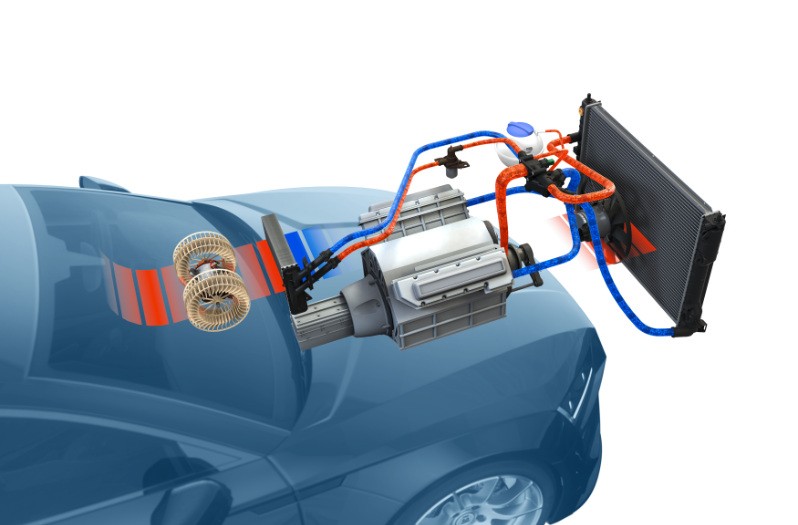
Thermal management taken to the next level - extensive, reliable, HELLA!
In addition to the classic thermal management range, we also offer a wide selection of electrical and electronic IAM products for thermal management, including thermostats (coolant thermostats) and sensors (e.g. coolant temperature sensors).
This availability will further improve our engine cooling product portfolio and ensure that our partners receive all the items they need from a single source.