Damage patterns on alternators – recognising causes, avoiding failures

The alternator, formerly called a generator, is one of the central components in a vehicle electrical system. A failure can have all kinds of consequences: ranging from minor voltage problems right up to complete failure of the electronics of the vehicle electrical system. Even if the alternator is the direct source of the fault in such cases, the actual cause of the failure is not always to be found in the component itself. External influences such as moisture, oil contamination or mechanical strain can cause damage and ultimately lead to failure. If such influencing factors are recognised and rectified at an early stage, repeated failure can be specifically avoided.

Important safety information

The following technical information and practical tips have been compiled by HELLA in order to provide professional support to vehicle workshops in their day-to-day work. The information provided on this website is intended for use by suitably qualified personnel only.  

Alternator damage assessment

Damage caused by short circuit or polarity reversal

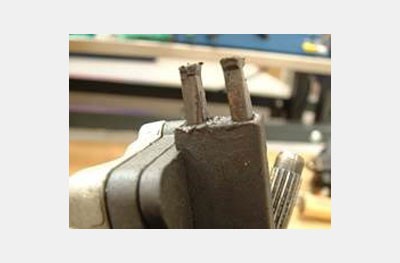
If there is a complete failure or significantly reduced alternator output immediately after a battery change, jump start or work on the alternator, there may be damage to diodes or soldered connections.

Cause:
A short circuit or polarity reversal when the battery was connected or during a jump start, the disconnecting of the battery while the engine is running or unintentional contact by tools can all lead to an uncontrolled flow of current. In all such cases, there is a risk of thermal overload of the semiconductor components.

Effects:
diodes and soldered connections in the alternator can be damaged or completely destroyed by the heat generated. The result is that the alternator no longer supplies any voltage.

Practical tip:
the battery should always be disconnected before carrying out any work on the alternator, especially when removing, installing or undoing electrical connections. Ensure correct polarity and the right connection sequence when jump-starting or making connections. Tools must not touch live parts.

Corrosion damage

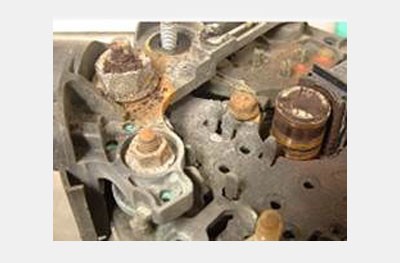
If the alternator output suddenly fails or is significantly reduced without any visible mechanical damage, this may be due to moisture ingress.

Cause:
Alternators are always protected against splash water. Under unfavourable conditions, however, moisture can penetrate the housing, for example as a result of high-pressure engine washes, through splashing water in heavy rain or by leaks in the cooling system. Persistent wetness in the area of electrical contacts and connection terminals is particularly critical.

Effects:
corrosion on connection terminals, plug connections or conductor tracks can lead to increased contact resistance and thus to voltage losses and contact problems. This can result in unstable voltages in the vehicle electrical system, in sporadic failures or a complete loss of the alternator’s power. If moisture reaches the inside of the alternator, it can also attack the bearings. This can lead to bearing damage with increased noise build-up and even blockage of the rotor.

Practical tip:
when using high-pressure jet cleaners, ensure sufficient distance from electrical components is kept, especially in the area of the alternator. Splash guard coverings must always be refitted correctly after maintenance or repair work is complete. And after heavy exposure to water, the affected area should be dried in order to minimise moisture levels. Regular visual inspections can help to recognise the onset of corrosion at an early stage and prevent subsequent damage.

Oil contamination on the alternator

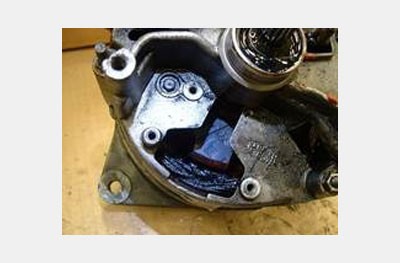
If the alternator output is severely restricted or fails completely, oil contamination visible on the outside can be a clear indication of the cause. There are often traces of oil on the housing or on the electrical connections.

Cause:
Engine oil, hydraulic oil or diesel fuel can penetrate the alternator via leaking seals or damaged cables. Common causes are leaking valve cover seals, defective oil lines or leaks in the area of adjacent units. The oil usually creeps into the housing, where it spreads unnoticed.

Effects:
once the oil has entered, it forms a lubricating film on the windings, slip rings and carbon brushes. This can soften the carbon brushes; then a conductive mass forms with the abrasion debris of the carbon brushes, which can lead to contact faults, short circuits or increased wear. In many cases, this results in a complete failure of the alternator. If the oil penetrates into the electronics, it can also attack soldered connections and lead to detachment of or damage to conductor tracks.

Practical tip:
if there are traces of oil on the alternator, the cause should be determined and rectified immediately in order to avoid subsequent damage. Such problems include, in particular, leaks in adjacent units or in oil-carrying lines. When repairs are being carried out in the vicinity of the alternator, we also recommend a visual inspection to check for the onset of any oil leaks. During repairs in the vicinity of the alternator, this component is also to be protected from leaking oil by making use of suitable covers.

Notes on cleaning:
when cleaning a dirty alternator, do not use any flammable or solvent-based cleaning agents. There is a risk of fire on account of possible sparking. Only non-flammable cleaners suitable for use in the field of electrical engineering should be selected. Cleaning should ideally take place when components are in the dismantled state.
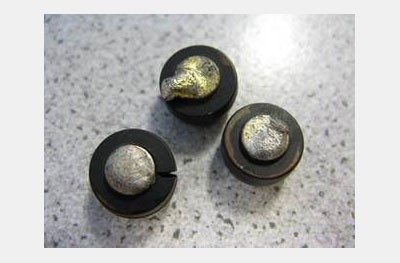
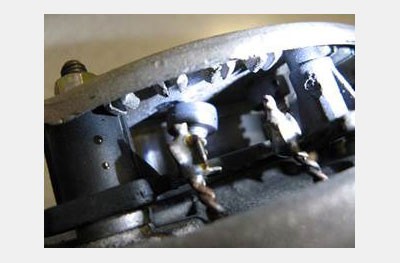
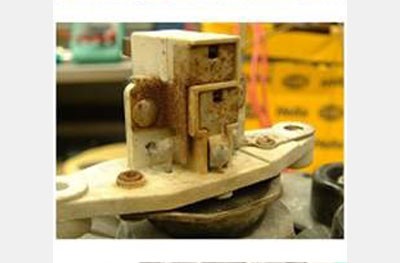
Oily alternator because of a leaking vacuum pump that has been mounted

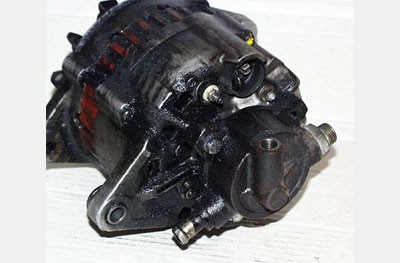
If the alternator is already heavily oiled in the area connecting to the vacuum pump, the cause is often a leak at the interface between the two components. The leaking engine oil can cause the alternator to fail completely within a short time.

Cause:
In some diesel engines, the vacuum for the brake booster is generated by a vacuum pump attached directly on the alternator. Sealing between the alternator and pump is usually achieved by means of a sealing ring. If this is not replaced when the alternator or vacuum pump is replaced, leaks may occur. Age-related material fatigue of the sealing ring can also lead to oil leakage.

Effects:
the escaping engine oil goes directly into the alternator. Once there, it proceeds to soak and soften up the carbon brushes. If the oil mixes with the abrasion debris of the carbon brushes, a conductive mass is formed, which can cause short circuits in the alternator. This usually results in a complete failure of the alternator within a short time.

Practical tip:
when the alternator or vacuum pump is replaced, the seal between the two components must always be replaced, too. Even if there are visible traces of oil, the connecting area should be checked and the sealing ring replaced.

Damage to the vacuum pump as a result of insufficient lubrication

In some diesel engines, the vacuum pump is attached directly to the alternator. This compact design saves installation space, but requires special care when the alternator is installed and removed. If anomalies such as a drop in brake boost or unusual noises occur in the area of the alternator, there may be damage to the vacuum pump.

Cause:
The vacuum pump is lubricated via the engine lubrication system. If the engine oil level is too low or the oil is contaminated or very old, this can lead to insufficient lubrication and mechanical damage to the pump. Blocked oil channels or installation errors, such as no initial oil filling, can also be the cause.

Effects:
inadequate lubrication can cause the vacuum pump to block, overheat or wear out prematurely. This can also result in damage to the alternator, caused, for example, by excessive load on the alternator shaft or oil entering the alternator housing if the connecting area is leaking. In addition, the brake boost may be impaired, which impacts negatively on driving safety.

Practical tip:
when replacing an alternator with an attached vacuum pump, it is essential to follow the manufacturer's installation instructions. Before installation, the vacuum pump chamber must be filled with suitable oil in accordance with the manufacturer's instructions. In addition, the vacuum system and the oil supply should be checked for contamination and cleaned if necessary. The quality and fill level of the engine oil are also to be checked. After installation, oil and vacuum lines must be checked for leaks.


Bearing damage on the alternator

Indications of bearing damage on the alternator may be noticeable noises when the engine is running and a significantly reduced or absent alternator output. Noticeable vibrations or a blocked rotor, i.e. the inside of the alternator is no longer rotating, can also indicate this kind of damage.

Cause:
Bearing damage can be caused by external influences such as water ingress. Excessive tension on the drive belt also places a considerable load on the bearing. In addition, imbalances or strong vibrations from the belt drive can be transferred to the bearing via the belt pulley and thus lead to premature wear.

Effects:
a damaged bearing can lead to clearly audible running noises, radial or axial play in the rotor and even blockage of the alternator. In severe cases, this can result in sliding contact between the claw-pole rotor and the stator, which damages the housing. The result is a complete failure of the alternator.

Practical tip:
when installing an alternator, ensure that the belt tension is correct, that the tension and idler pulleys are intact, and also that the installation area is dry and clean. Defective pulleys or worn belt tensioners must be replaced.

Damage as a result of incorrect tightening torques

If the tightening torques specified by the vehicle manufacturer are not observed during installation of the alternator, various types of subsequent damage may occur. Both too high and too low a tightening torque can cause damage to the mechanical connection, to the electrical contact points or to the housing.

Cause:
If the specified tightening torques are not adhered to during installation of the alternator, this can lead to problems at fastening points, at the connection terminals or on the belt pulley. Too high a torque puts excessive strain on the housing and the alternator shaft, while an insufficient torque leads to loosened connections. Inadequately fastened connection terminals can also lead to poor contacting. An incorrectly tightened belt pulley can come loose or tilt during operation.

Effects:
if the tightening torque is too loose, then the alternator may also become loose during operation. This results in vibrations, cracks in the housing or loosened electrical connections.
If the tightening torque is too high, the fastening eyes on the housing may break during installation.
Loose connection terminals cause contact resistance, which can lead to contact problems, heat build-up and burnt connection points.
If the belt pulley is not fastened correctly, it can come loose or tilt and cause damage to the alternator shaft, the belt drive and to surrounding components.

Practical tip:
the specified tightening torques must be observed during installation of the alternator. This applies to the mounting on the engine block and also to the installation of the belt pulley and the tightening of the electrical connection terminals. A suitable torque spanner should always be used.
This is the only way to avoid installation errors and subsequent damage.

Damage to the alternator as a result of changes to the belt drive

If belt pulleys are used on the alternator that do not correspond to the intended design or function, for example rigid variants instead of overrunning alternator pulleys, this can lead to a considerable amount of subsequent damage. Deviations in diameter, the number of grooves or the groove geometry and also an unsuitable weight of the pulley change the vibration decoupling in the belt drive and can cause imbalances. Both have a negative effect on the load on the alternator shaft, the bearings and other components.

Cause:
The belt pulley transmits the driving force to the alternator via the V-ribbed belt. If the diameter, the number of grooves, the groove geometry or material properties of the belt pulley are altered, this can lead to uneven power transmission and to increased vibrations. An unsuitable belt pulley can also impair the torsional vibration damping.

Effects:
unsuitable belt pulleys can cause increased vibrations and uneven loads during operation. Such problems lead to premature bearing or shaft damage on the alternator. In severe cases, material cracks, breakage of the alternator shaft or damage to the housing may occur. The belt drive itself and adjacent components can also be affected. Visible indications are worn shaft journals, damaged bearing areas or broken belt pulleys.

Practical tip:
only belt pulleys that are approved by the vehicle or alternator manufacturer and that are suitable for each respective vehicle type in terms of design, diameter and function may be used on the alternator. Before installation, always check whether the installed belt pulley complies with the technical specifications.

Link tip

Here you will find tips and remedies for certain symptoms and causes of failure of a defective alternator . We also show you on this page how to check the charging system such as, for example, carrying out a visual inspection before diagnosis, the checking of batteries, alternator check and testing with the diagnostic unit.
More product information about starters and alternators from Hella can be obtained here, too.

How helpful is this article for you?

Not helpful at all
5
4
3
2
1
Very helpful
Success

Wrong Captcha

Wrong Captcha

Error

Something went wrong

Spare Parts Finder
Manual vehicle identification Oe-No. Universal Parts
Top manufacturers
Other manufacturers
Vehicle series Back
Vehicle Back

Enter the OE number in the input field. You will usually find the OE number on the spare part itself or in the vehicle documents.

Spare Parts Finder
Simple vehicle identification Also determine spare parts with OE numbers Detailed product information Find wholesalers near you
dummy
Processing Selected Car
Manufacturer
Vehicle series
Vehicle
Engine output
Engine displacement
Fuel type
Construction year
Engine code

Choose category:
Back
dummy
Teilen Sie
Send via Copy link
URL copied to the clickboard !
Article NUmber
Number
Article Number Was Copied !
Search The Web Mounting Instructions
More Details
Name Value
Less Details

Your Dealer
Autoteile Krammer GmbH
dummy
Lechstraße 1-3
68199 Mannheim
Show Map

This might also interest you

Starter damage assessment
Basic Knowledge
Starter damage assessment
Starter faulty? Spot typical causes such as overloading or misfiring and find out how to repair damage effectively.
Reading Time: 1 minute
Basic Knowledge
E-mobility in everyday workshop activities: technology and requirements
Electromobility is changing workshop processes: find out how workshops handle high-voltage systems, new diagnostics procedures and targeted qualifications
Reading Time: 16 minutes
TPS sensor
Basic Knowledge
TPS sensor – function & troubleshooting
Learn how to check a throttle potentiometer for defects and recognize the most common symptoms.
Reading Time: 2 minutes
Intake-air temperature sensor
Basic Knowledge
Intake-air temperature sensor - checking & faults
Discover how to check the intake air temperature sensor for defects and how to replace it efficiently.
Reading Time: 3 minutes
Ignition coil
Basic Knowledge
Ignition coil – checking, measuring, faults
Recognize symptoms of a defective ignition coil and get to know ignition coil types - with instructions for troubleshooting and testing.
Reading Time: 14 minutes
Ultrasound-based parking aid - park distance control (PDC)
Basic Knowledge
Park Distance Control (PDC): a parking aid based on ultrasound
Learn all about the function and maintenance of ultrasonic parking aids (PDC), including repair tips.
Reading Time: 5 minutes
Service work on the loading system
Basic Knowledge
Service work on the charging system
Step-by-step instructions for servicing the charging system, including visual inspection and signal testing on the controller.
Reading Time: 6 minutes
Check multifunction controller
Basic Knowledge
Check multi-function regulator
Find out how to check the multifunction regulator, measure the generator voltage and ensure that the regulator is functioning correctly.
Reading Time: 4 minutes
Lane change assistant
Basic Knowledge
Lane change assist
Learn all about the lane change assistant - diagnostic and repair instructions, supplemented by a clear video.
Reading Time: 13 minutes
Replacing the horn
Basic Knowledge
Car horn replacement - instructions
Step-by-step instructions for replacing the horn on various models such as the Audi TT/RS and Grand Cherokee.
Reading Time: 5 minutes

Great! Just one more Step

Subscription successful

Head to your inbox and confirm your email address so that you don’t miss our updates!

Get ready for brand new technical videos, car repair advice, trainings, helpful diagnostic tips, marketing campaigns and much more... delivered straight to your inbox every two weeks!