Lamp technologies in electric vehicles: System information, maintenance and repair instructions
Electric vehicles use various lamp systems, which are characterised by their efficiency and technology in each particular vehicle class. Depending on the equipment variant, you will therefore find the classic halogen lamp with a reflector or projection module, xenon lamps and, of course, modern LED lamps. And all this just in the same way as we know it from traditional vehicles with combustion engines.
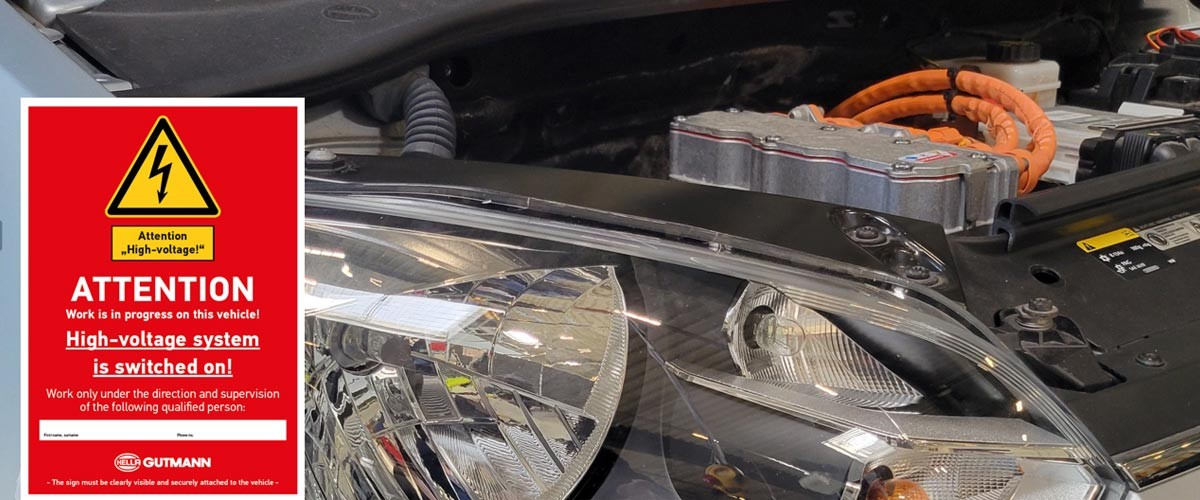
Important safety information
Which lamp systems can be installed?
Some vehicle manufacturers also offer xenon lamps as an option in their equipment variants. These lamps offer high light intensity and good illumination of the road, a bonus which improves visibility and safety during night-time driving. So it can well be that some early electric vehicles, such as the BMW i3, Nissan Leaf or Tesla Model S, are fitted with xenon lamps.
Modern electric vehicles are equipped with advanced LED lamp systems that offer outstanding light output. These variants are particularly popular because of their energy efficiency and long service life. LEDs deliver high luminous efficacy and can be integrated in various shapes and designs. Modern Matrix LED lamps enable adaptive light distribution that automatically adjusts to the driving conditions. And furthermore, the illumination can be blanked out in certain areas in order to reduce the glare effect on other road users.
Lamps with laser light offer an even higher light intensity and range than conventional LED lamps and are mainly used in premium vehicles. LED lamps not only offer better visibility and safety, but they also boast greater energy efficiency compared with conventional halogen or xenon lamps.
What should I pay particular attention to?
Maintenance and repair instructions
Safety precautions
Diagnosis and repair of the lighting system
General repair instructions
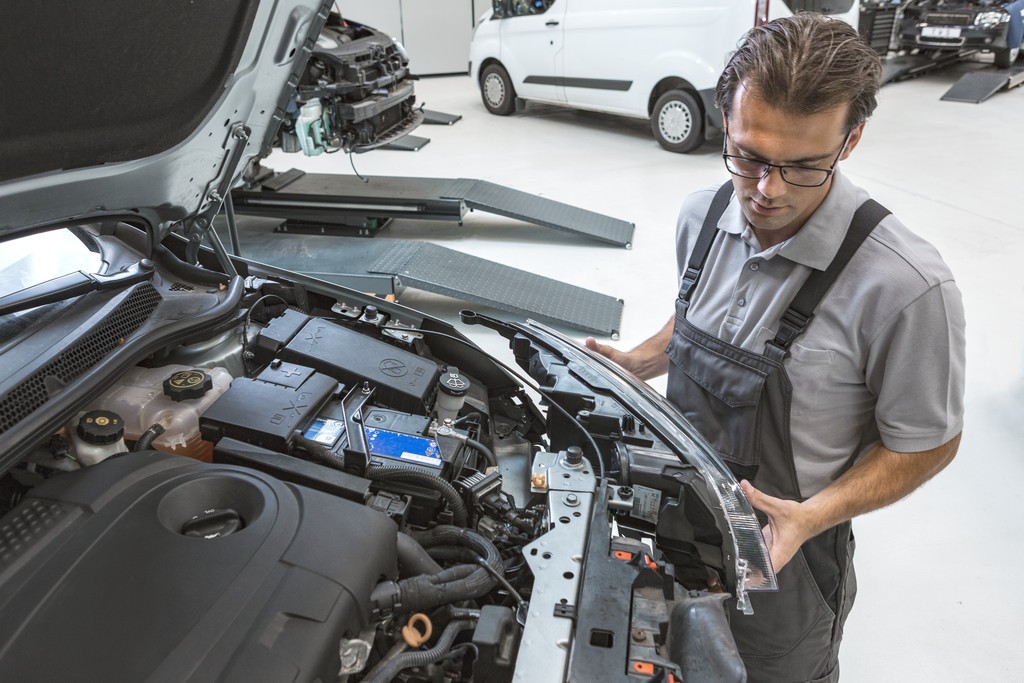
General information on replacing a light source or a lamp on an electric vehicle.
Read the vehicle operating instructions:
The operating instructions for each individual vehicle list the specific instructions and safety information required to replace, for example, a bulb on a halogen lamp. It is also stated whether the repair should only be carried out by a specialised workshop.
Observe all safety instructions!
Repairs on or in the vicinity of high-voltage components may only be carried out in a specialist workshop by persons who have been instructed in electrical engineering and who are appropriately qualified.
Use suitable spare parts
One of the most important points for achieving a successful repair is getting the right spare part. A definite assignment of the spare part number is crucial to ensure that everything works perfectly in the vehicle after the repair has been carried out. After having been replaced, electronic components must then be adapted and adjusted to suit the vehicle.
Tools and equipment:
So as to avoid damage to the lamps or the vehicle body, only suitable tools should be used to carry out repairs.
Adjusting lamps:
After replacement or repair, the lamps have to be correctly adjusted to ensure optimum illumination of the road and to avoid dazzling other road users.
Carry out a function test:
After the repair, the functioning of the lighting system has to be checked to ensure that all components are working properly.
Please always observe the safety and repair instructions provided by the relevant vehicle manufacturer!
Important!
Functional descriptions and also maintenance and service information may vary depending on the vehicle manufacturer and are dependent on each individual equipment variant or system configuration.
The various diagnostic options have been illustrated, as an example, using the mega macs X diagnostic device.
Schematic illustrations, pictures and descriptions serve to explain this text and cannot be used as a basis for vehicle-specific repairs.
Further information on the subject of LED lamps can be found in the chapters " Adjusting and changing LED lamps " and " BMW LED lamps: Useful information, repair instructions and practical tips ."
How helpful is this article for you?
Success
Success
Success
Success
Error
Please tell us what you did not like.
Thank you for your feedback!
Wrong Captcha
Something went wrong
This may also be of interest to you