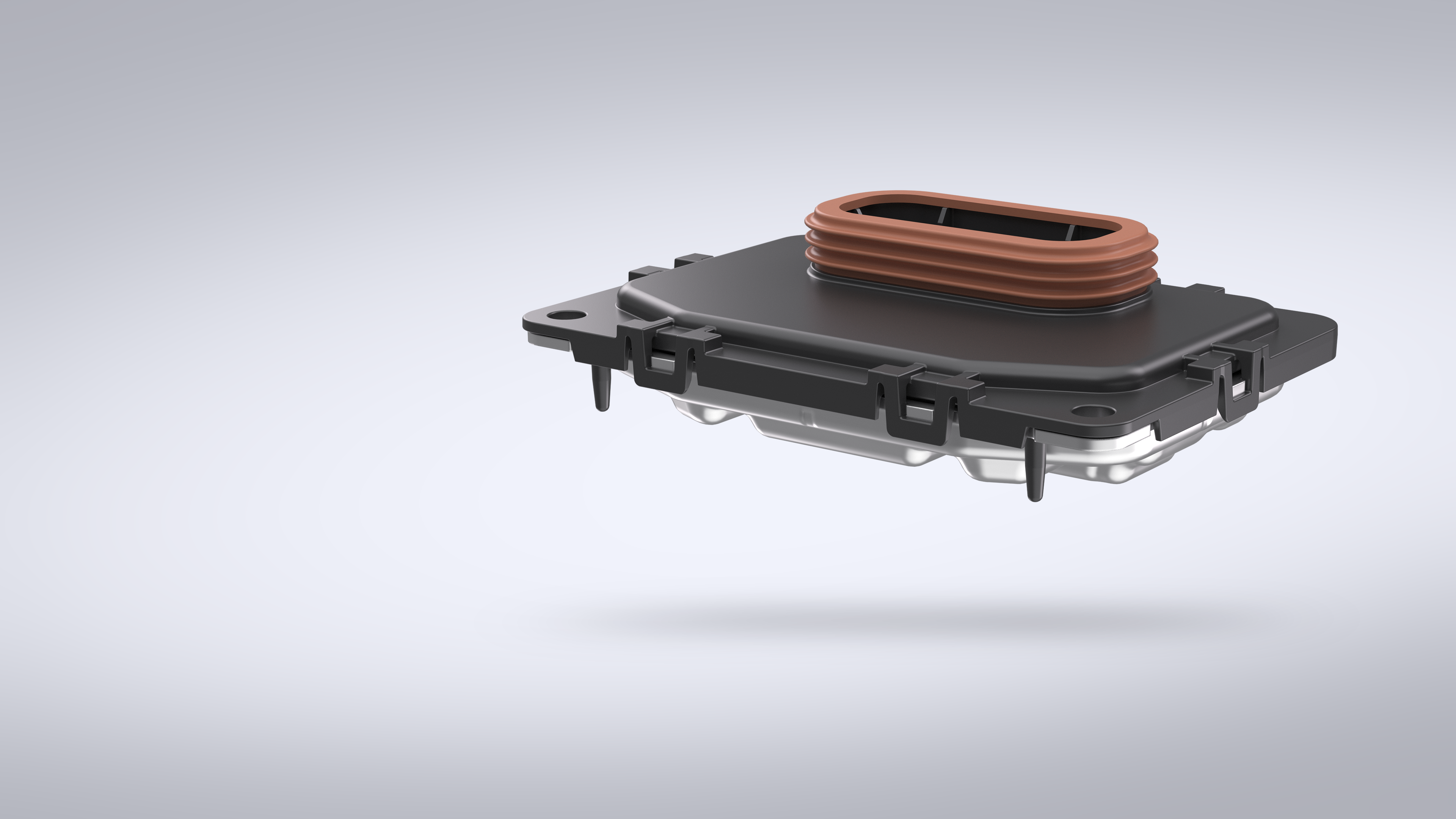
FORVIA HELLA launches its first headlamp lighting ECU with Chinese chips into mass production in China
- The lighting ECU was fully developed by FORVIA HELLA’s local team in China
- As the first FORVIA HELLA electronics project which widely uses domestic chips in China, the lighting ECU strengthens local supply chain resilience
- The product adopts highly integrated lightweight design, and modular architecture, enabling efficient and precise control of headlamp lighting functions
- The product addresses the automotive industry’s increasing requirements for stabilized supply chain, cost optimization, and high adaptability
Shanghai, 14 July 2026. International automotive supplier FORVIA HELLA announces that its first headlamp lighting Electronic Control Unit (ECU) equipped with domestic produced chips has entered series production in China. The product is primarily being installed in several mainstream models of a leading Chinese automotive brand. Against the backdrop of accelerating electrification, intelligence, and platform-based development in the automotive industry, the headlamp lighting ECU has become a key electronic control unit that that support Chinese automakers in achieving greater supply chain resilience, cost competitiveness, scalability, and adaptability across vehicle platforms. Fully developed and produced by FORVIA HELLA’s local team in China, the headlamp lighting ECU helps OEMs address increasing requirements in these aspects, while enabling efficient and precise control of headlamp lighting functions, with domestic chips, highly integrated lightweight design, and a modular architecture.
“As automotive lighting rapidly evolves from basic illumination toward platform-based development, differentiation, and scalability, the headlamp lighting ECU will play an increasingly critical role in the vehicle’s electronic and electrical architecture. Leveraging our capabilities in lighting electronics, systems engineering, and the localized supply chain, FORVIA HELLA provides Chinese automakers with more efficient, flexible, and cost-competitive lighting electronics solutions. The launch of this controller is a key step in deepening FORVIA HELLA’s localization strategy and aligning closely with the development of China’s automotive industry,” says Dr. Chen Tian, Head of Business Group Electronics Product Center Body Electronics and Lighting Electronics in China at FORVIA HELLA. “Our solution is not a single-point technology upgrade. Rather, through the adoption of Chinese domestic chips, we have built a solid foundation for supply chain security. The modular architecture gives OEMs the flexible production capability of ‘one solution adaptable to multiple vehicle models,’ turning cost reduction and efficiency improvement from a concept into a quantifiable competitive advantage.”
As FORVIA HELLA’s first electronics project that widely use domestic chips, the headlamp lighting ECU further extends localization capabilities to the level of core electronic components. Through rigorous validation and quality assessment of domestic chips, FORVIA HELLA ensures the performance and reliability of the controller while providing vehicle customers with more predictable local supply assurance. This adoption not only helps enhance supply chain autonomy and controllability, but also enables FORVIA HELLA to achieve more efficient collaboration across local R&D, procurement, and manufacturing systems in China.
At the same time, the headlamp lighting ECU combines a highly integrated lightweight design with a compatible and modular architecture. Reduced to the size of a bank card and weighing only 87 grams, the controller helps save in-vehicle installation space and material costs. Its fully symmetrical left-right system architecture enables one single ECU to centrally control all headlamp lighting functions, covering more than ten lighting scenarios such as low beam, high beam, and direction indicators. Through software settings, the same solution can flexibly meet the lighting configuration requirements of different vehicle models, enabling OEMs to achieve “one solution for multiple models.” Compared with traditional automotive lamp electronic control units, which often require extensive customization of hardware, structure, and software for each vehicle model, this platform-based controller shortens development cycles, increases the reuse of initial engineering investments, reduces component complexity, and improves efficiency across development, validation, procurement, production, and assembly.

Contact

Press Officer
Rixbecker Str. 75
59552 Lippstadt
Phone: +49 2941 38-7566
Fax: +49 2941 38-477545
Related content
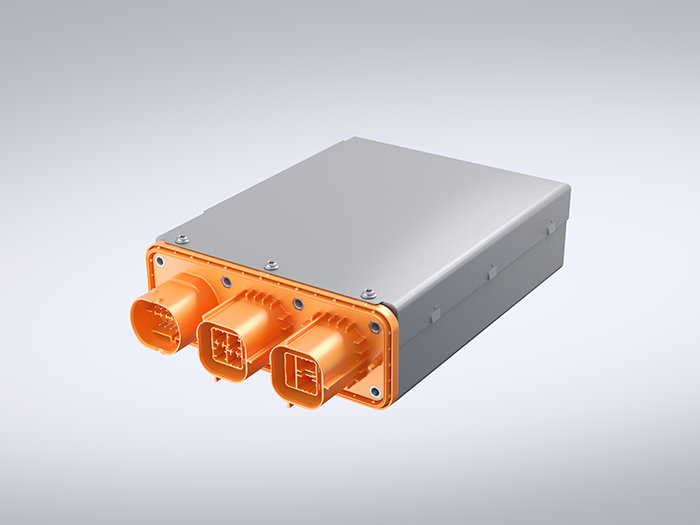
FORVIA HELLA receives major series orders for highly integrated EnergyCore solutions
Major contract First series order for 3-in-1 high-voltage battery management: uniquely integrated system architecture.
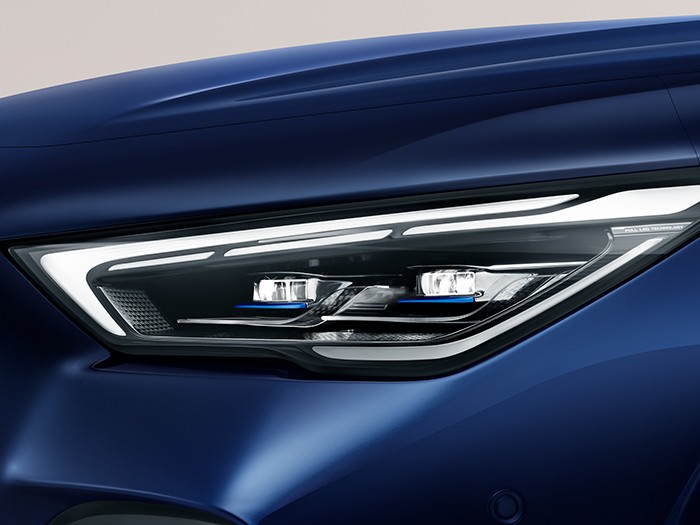
FORVIA HELLA develops 飞檐虎视 Fei Yan Hu Shi headlamps for Geely Galaxy Xingyao7 MAX
The headlamp is equipped with FORVIA HELLA’s new-generation slim lighting module and patented optical technology, defining safety through performance.